I have to make an admission upfront: I am an absolute fan of Meik Wiking, and have been since before I started this blog. I reckon his book, The Little Book of Hygge, probably inspired a good few people to try living more hyggely, and definitely drove an interior design ethos in the UK for a good few years.

The book was beautiful, and deserved attention, but the concept of hygge that companies and stores grabbed was not, ultimately, true hygge. They were selling the idea of fur throws, candles everywhere and minimalistic scandi chic. Hygge can’t be bought like that: it’s an art, or even more so a craft that requires skill, practice and the ability to see great beauty in a pile of pain.
If you are here and haven’t read The Little Book of Hygge, do go and read it before the winter sets in. Even better, get it on Audible and hear the author read it. That will also help with every other of his books that you read, because you’ll hear his voice in your head.
I’ve read his subsequent books, too, and enjoyed them, so when I saw that he had a new book coming out of course I preordered and grabbed my copy as soon as it came out. Welcome to The Art of Danish Living.
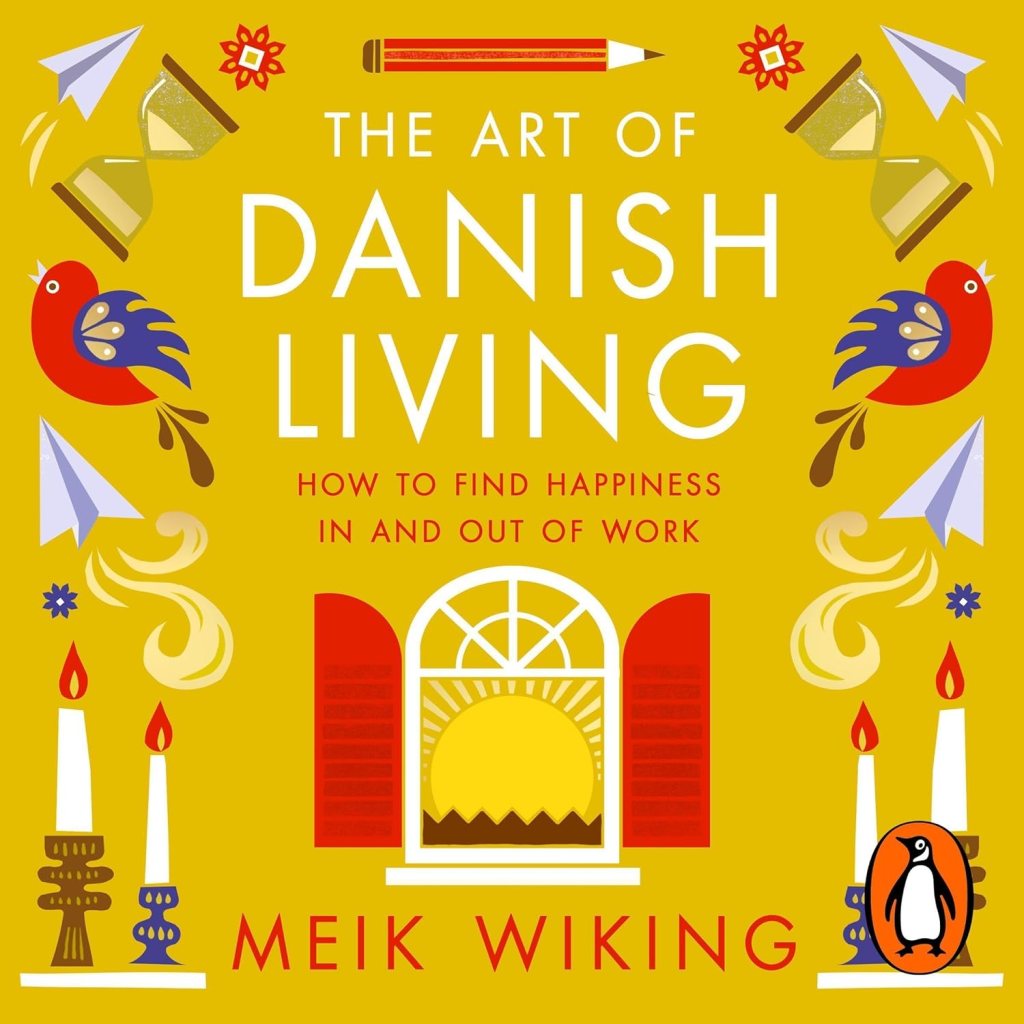
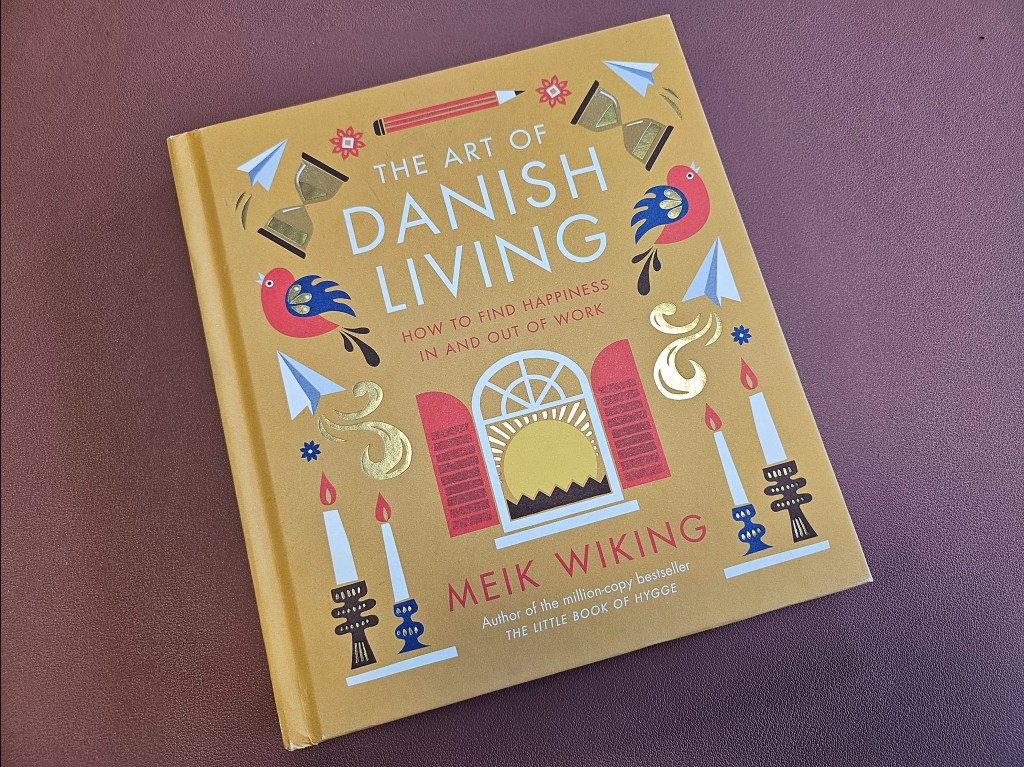
Let’s get the physical stuff out of the way. In size, paper and appearance this book sits very nicely alongside My Hygge Home on the bookshelf. It’s good quality paper, approximately 7 by 7 inches in size, and a good quality hardback. It looks cosy, the colour scheme is attractive and it makes a very acceptable gift. Yet, the book could just as easily slide into a management and workflow shelf and is designed to be read by people with a definite job or employment, paid or not.
Let me repeat that: the book is written for people who have a job or employment and who want to make sure their job, role or company run with as much happiness as possible. It’s not a cosy living, happy interiors book. It’s about an area that most people would just take as automatically being beyond hygge.
Meik Wiking is the CEO of the Happiness Research Institute, based in Denmark. He founded it precisely because he wanted to investigate why Denmark and other Scandi/Nordic countries always scored so highly on happiness indexes. He’s spent the past ten years looking into it, and ultimately recognising the things that work in home, employment and country-wide.


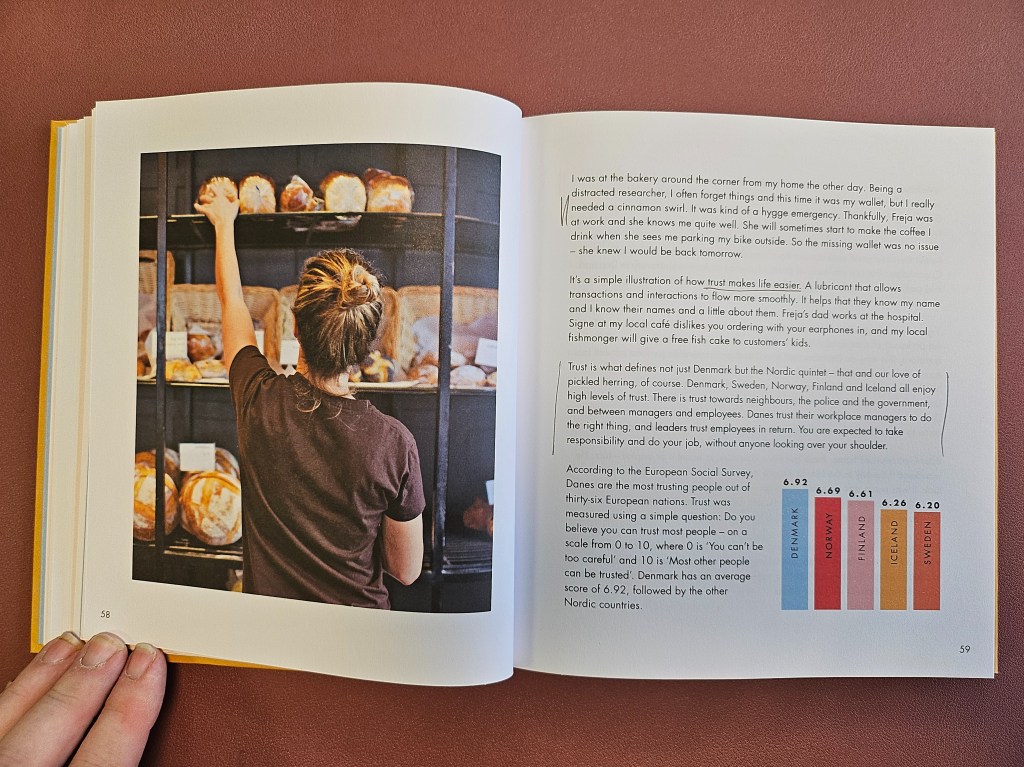
Hygge, for one, although it must be lovely to live in a country where Hygge just is and doesn’t have to be pushed for or reintroduced every few months because the concept is so alien to so many. Time out? Strengthening relationships by cooperation, not competition? Enjoying family life? Weird.
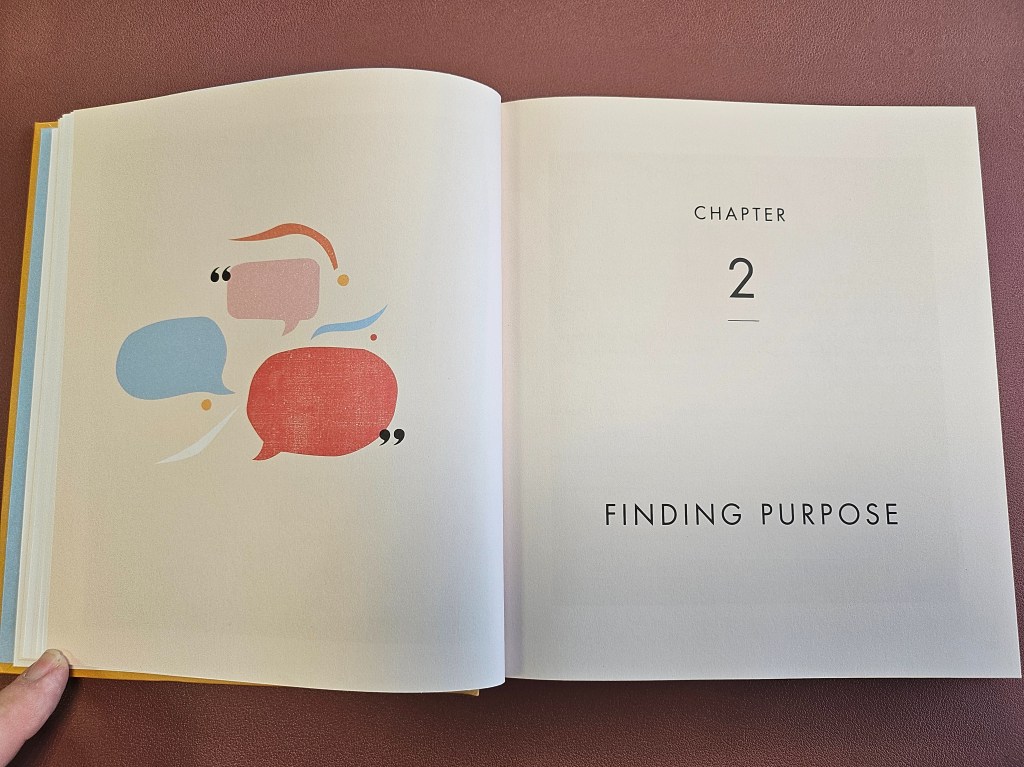
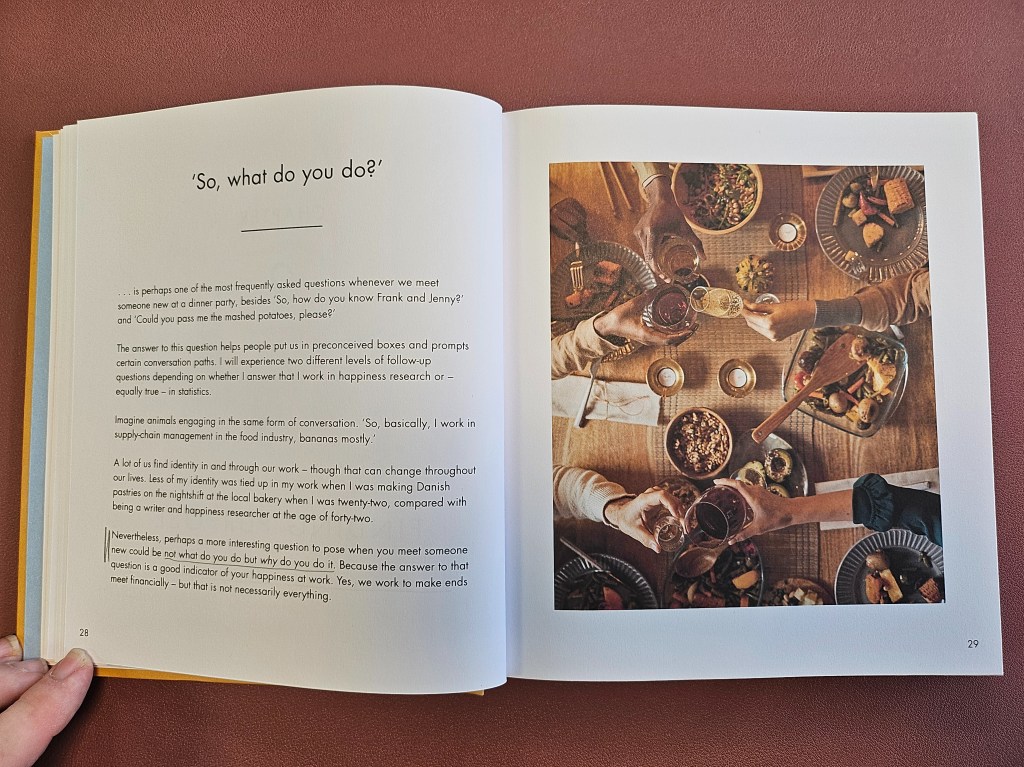
The Art of Danish Living is a book all about work and the work environment. To reap maximum benefit from it you will need a job or employment, voluntary or paid, and to need to organise life to maximise your time, effort and reward. It is separated into seven chapters: Work Joy, Finding Purpose, Flat-Trusting and Connected, The Pursuit of Freedom, the Work-Life Balance Myth, Reframing Success and The Future of Wellbeing at Work. There are 224 pages, many with illustrations or charts on, so it’s not the text-heavy management speak book it could have been. I’d say it would be useful for workers at all levels to read and, certainly, Meik Wiking seems to have aimed the content at the footsoldiers in a company not the leaders.
I like that the book has a very empowering feel to it. As someone who did effectively quit a job because of the negative effects it was having on me, I know I work better when I’m happy (Work Joy), when I feel like I have a role of importance in the organisation (Flat, Trusting and Connected), and when the job fits in well with my life (The Work-Life Balance Myth). The book has data on what creates a happier workforce, explains why a flat pyramid company (where the gap between the top management and bottom workforce is not too great) works well, and a lot of ideas, advice, questions and quizzes to enable you to decide how happy you currently are and what would boost your happiness.
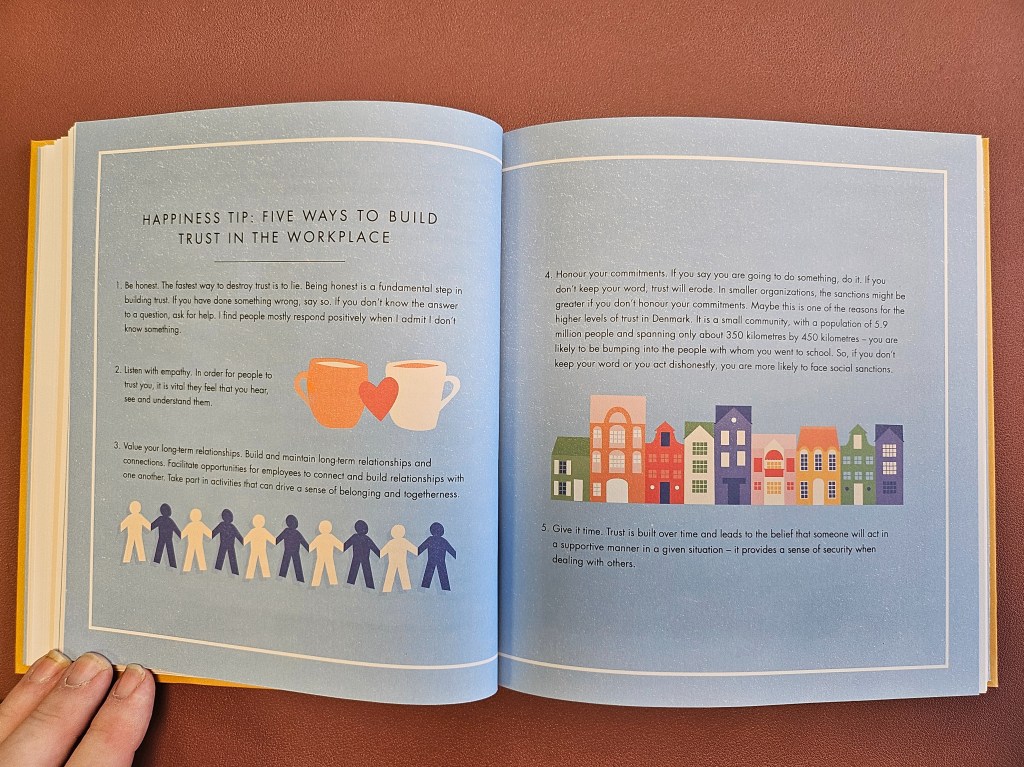
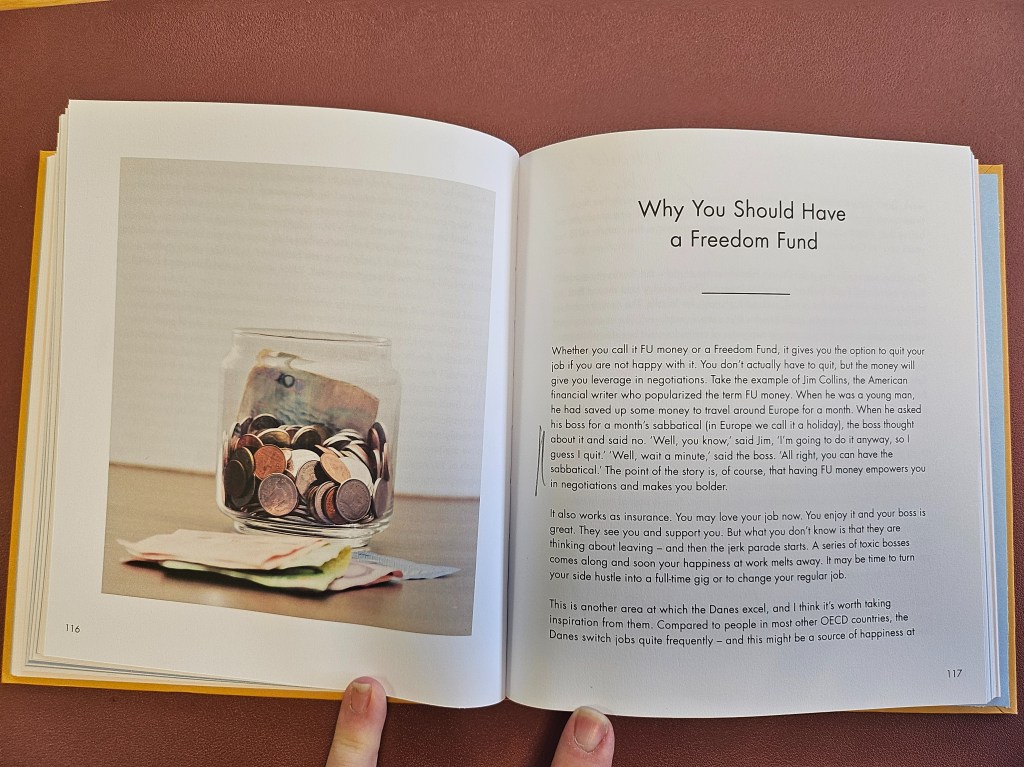
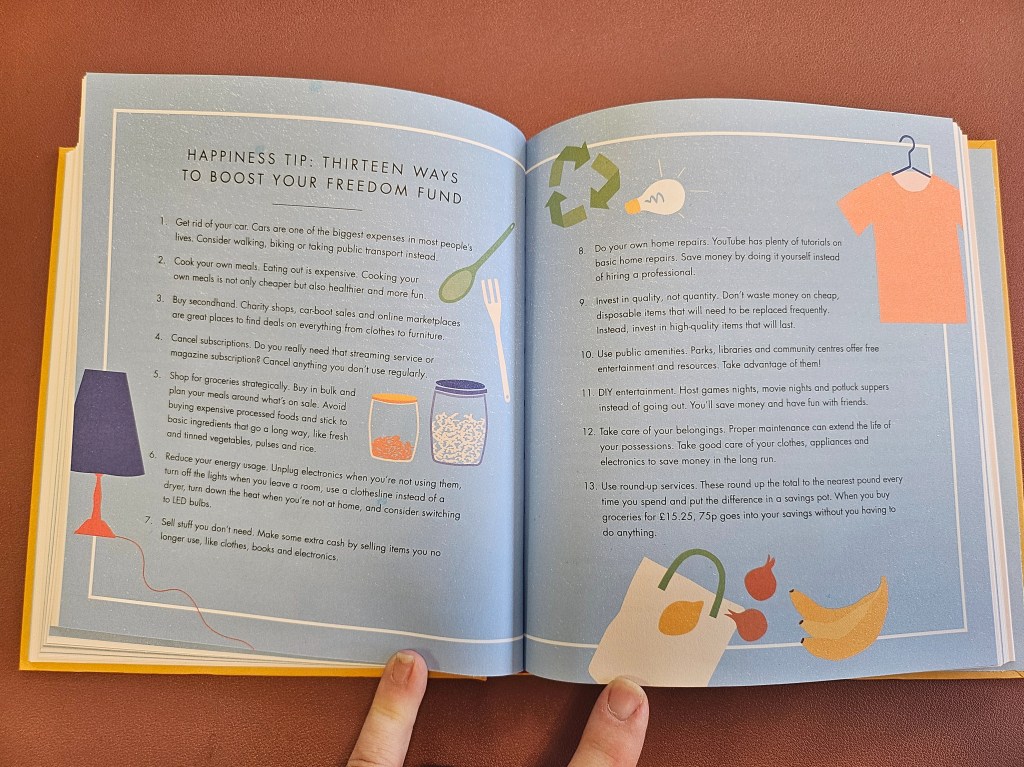
There are concepts that, possibly, I would have known if I read the management-speak books out there, but I am not a management-speak person. Meik Wiking explains them in a very accessible way. I love the idea of the three-metre rule, that anything within three metres of you in your job is your responsibility, whether that be customer satisfaction, appearance of the office or colleague’s welfare. It strikes me as a good way to let everyone have an input and control over the work ethos, and a way to spread responsibility so that things don’t fall through the gaps.
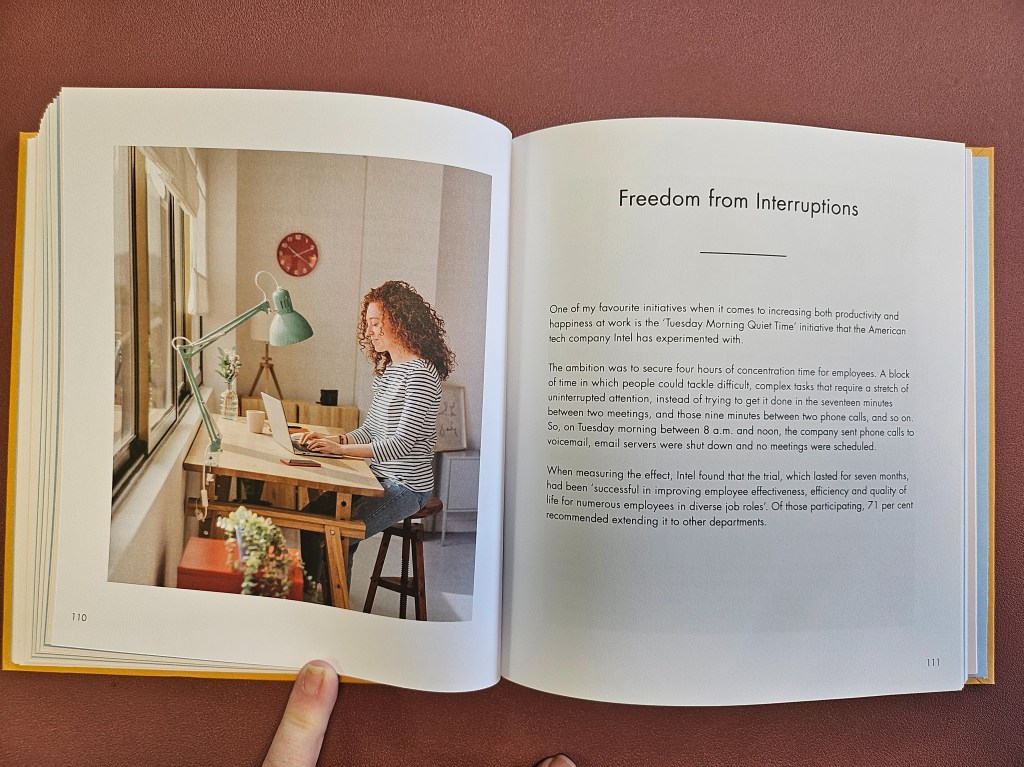
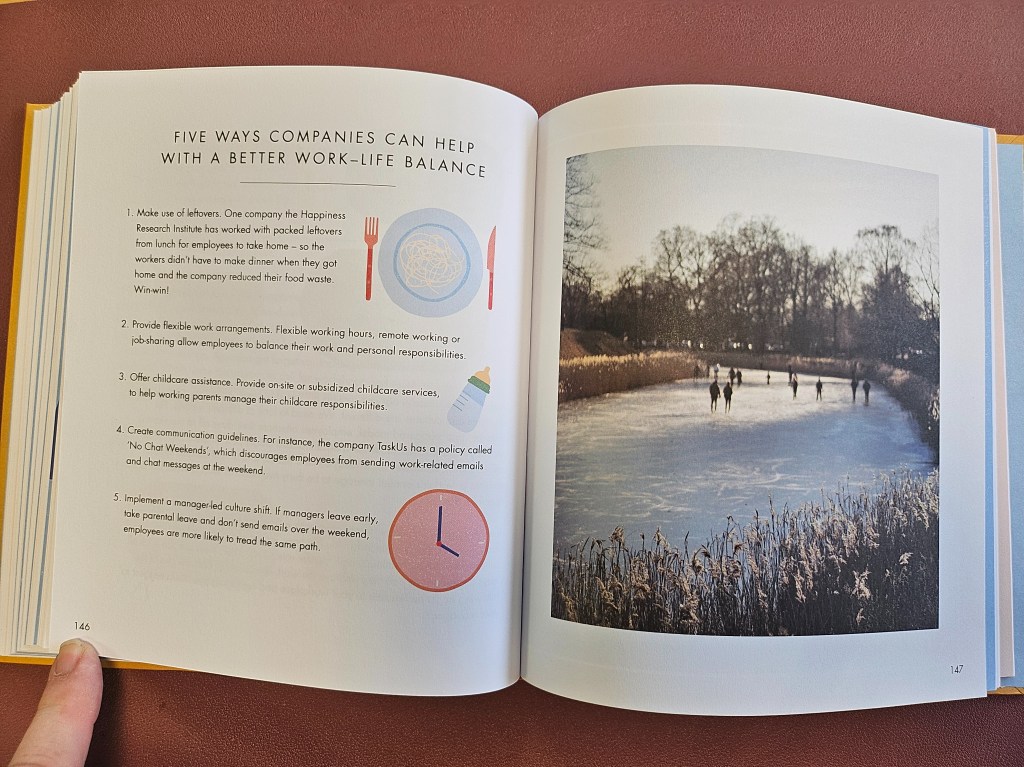
Balancing work and life is important for happiness, and throughout the book that is evident in how companies structure the day, the workflow or the location. There’s advice on disconnecting, creating no-contact times to handle emails or projects, and also how homemaking and shared chores can help reset work-life balance.
When he talks about the attitude of the companies and, indeed, the government to balancing work and family life, I have to say I feel envious. Prioritising family life seems vital to me in creating a happy and integrated community: being able to take time for appointments, time for special days like sports or Christmas pageants, having the autonomy to request and know you’ll get time off for elderly parents or health issues… well, it’s an issue that relies on trust between employer and employee that neither side will exploit the issue. Trust, it sometimes seems, that we have lost in the UK.
Chapter 6, Reframing Success, held gems of wisdom as well. What if the insatiable quest for more isn’t the route to a successful life? What if, once most of our needs are covered, we decouple wellbeing from wealth? As Meik asks “How do we remove the pricetag from happiness?” This chapter could easily have been a book by itself (probably is one, called The Little Book of Hygge, actually) and is something that we easily forget in a 24/7, ‘the one with the biggest toys wins’ society. Success is not what we hold in our hands: it’s what we hold in our hearts, heads and happiness. Whatever you do, love it. Own it, believe in it… and find contentment with it either as you are or by finding the space for you.
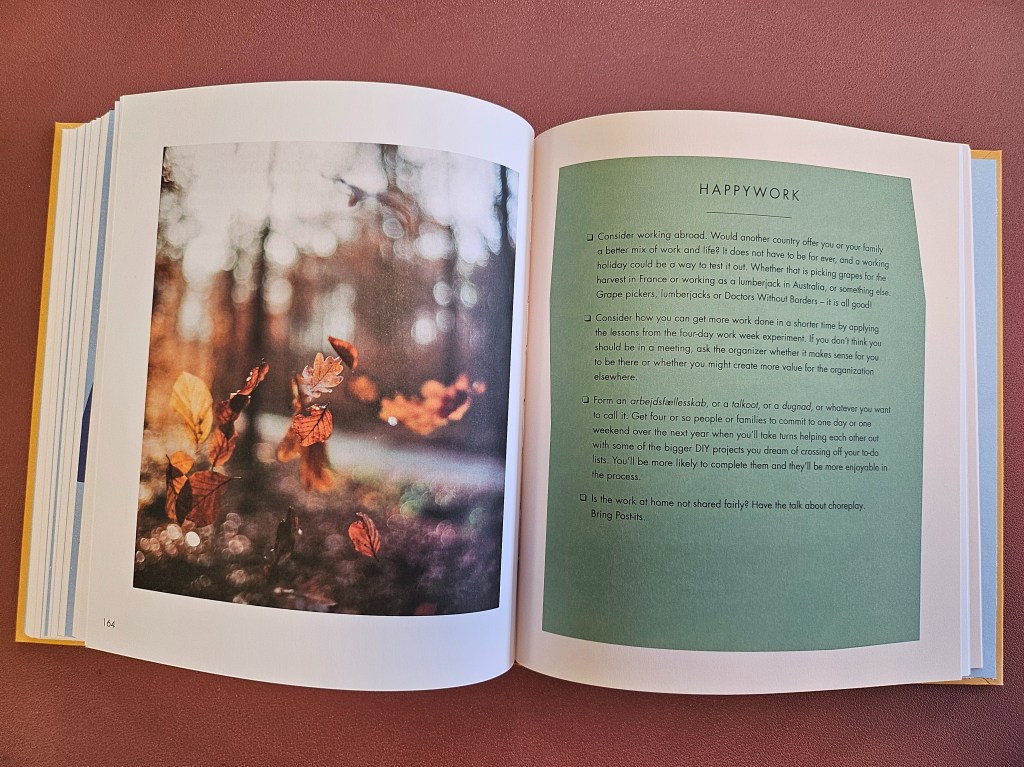
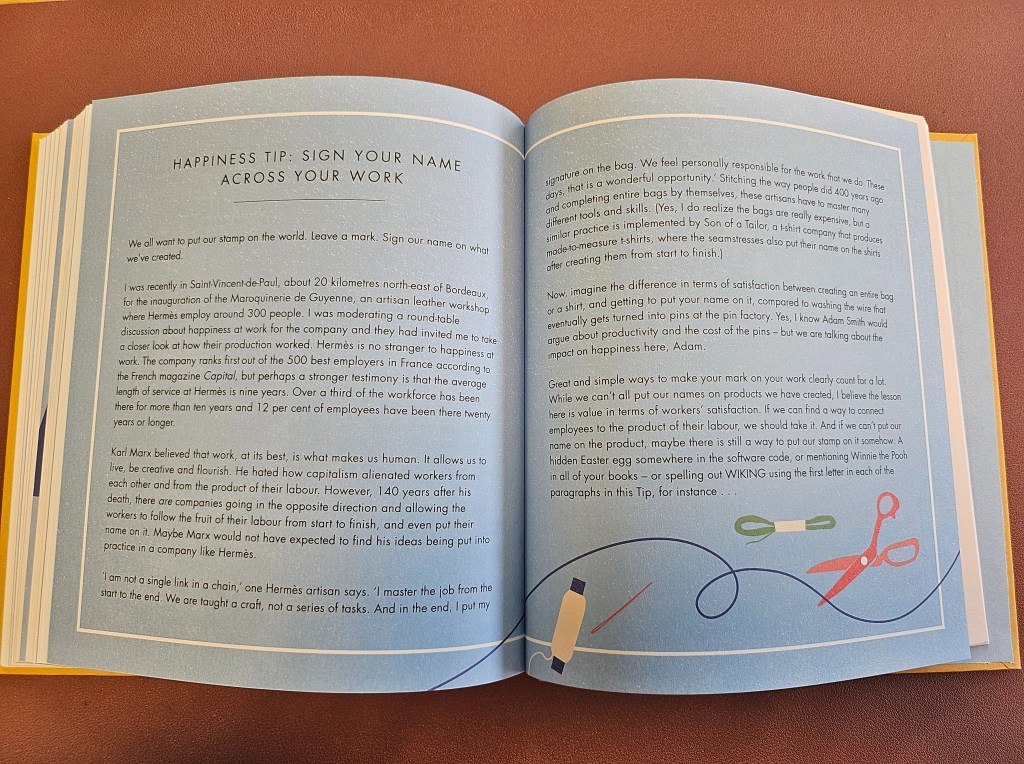

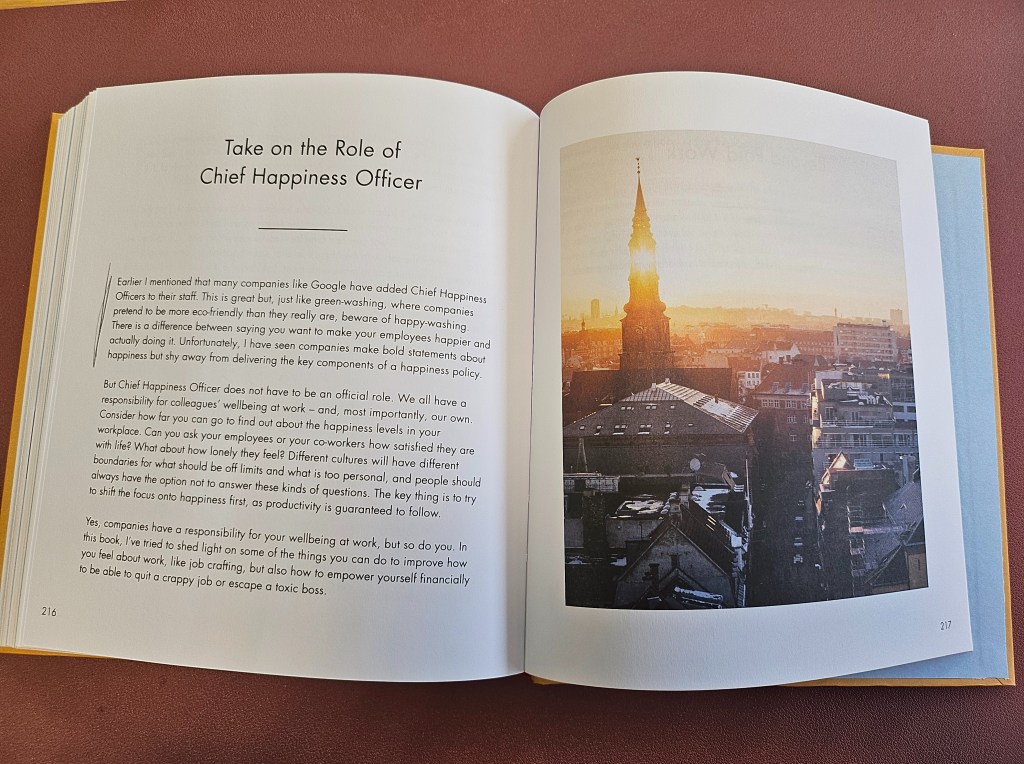
I have no doubt that there will be people who loved the last three books who have no need of this one. I also think there will be people who ran as far away from the ‘hygge’ trilogy (perhaps they should be re-named ‘the Cinnamon Bun Trilogy’ in honour of Edgar Wright’s ‘Cornetto Trilogy’) as possible who could usefully apply some of the concepts in this book to their life and work systems. The ideas don’t call for massive investments, just degrees of change of work practice, attitude, company ambitions. I already have a pretty hygge workplace (self-employment, the book points out, leads to greater work and life happiness, probably because of the greater degree of ownership and autonomy that comes with it) but I’m still willing to learn. The book is already marked with pencil, the stars where I need to consider another point and circles around ideas to discuss.
What, perhaps, saddens me is that I can imagine some of the places, countries and companies, that would benefit from the book most will run a mile, because profit and loss in the end are their whole motivation. Altering the working life or the social community relationship would take too much effort, cost too much time and money and ultimately not yield the profits that they count, rather than the profit of cohesion, community and cooperation that could exist.
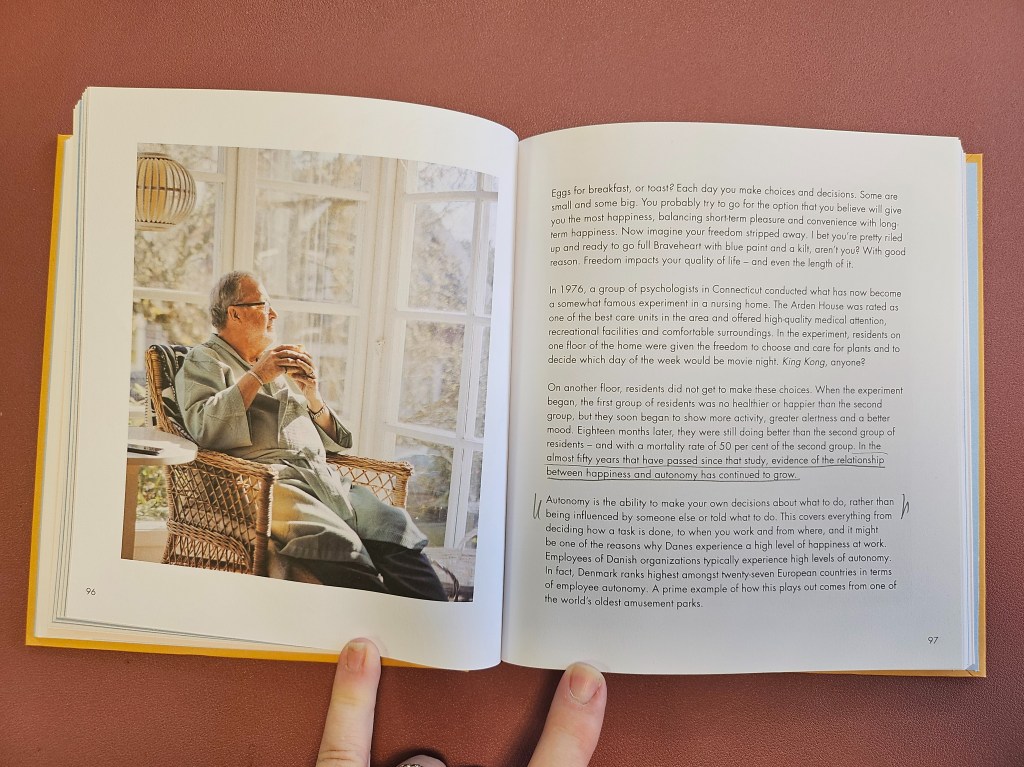
And finally, a flipthrough of the book, as per usual.
*** I bought the book myself from Amazon, and it’s available via this link: The Art of Danish Living, but it should also be available from any good bookshop or to order online***

How to Hygge the British Way is my gift to the world. I don’t get paid for writing it, I’m not in it for the kudos, financial rewards, to become an influencer, work with brands or otherwise make any money from the blog. That’s why there are no ads, and any products I mention and recommend have either been gifted to me or bought by me with my everyday wages or donations from supporters. Every book I review has been bought and read by me, unless stated otherwise.
I do get a couple of pennies each time someone buys from the Amazon links on my page, as an Amazon Affiliate, but otherwise if you’d like to support me, I like to give something back in return. That’s why I write books. It always feels good if you get a book back in return for some money. You can find a full list of my books at my Author’s Page on Amazon, but especially recommended for this time of year are:
Cosy Happy Hygge: Setting up a rhythm to life and rituals to enjoy it to make for a more balanced life that handles waves and storms better. Lent is a season of rituals and resets. The book has small and easy ways to make your life flow with grace and happiness, which lead to more hygge.
Happier: Probably my most personal book, it’s the story of how I used hygge and the little things in life to help boost my happiness. I still go back and reread to remind myself what I need to do to be a happy human. And it’s always the little things.
Is it too early to think ahead? My Christmas books are always available: Have Yourself a Happy Hygge Christmas is a good place to start, on how to make the season cosier, happier. Celebrating a Contagious Christmas was written during covid year, but has useful advice on celebrating when times are hard anyway and Enjoying a Self-Care Christmas is a short e-book on keeping Christmas simpler, easier and better for you, your waistline and your budget. It even includes 25+ suggestions for self-care activities over Christmas, as simple as sipping tea, keeping a list journal or lighting a candle. Bigger is not always better for Christmas.
I’m currently working on two book projects: I have a hankering to rewrite 50 Ways to Hygge the British Way, so it’s not available at the moment, but even dearer to my heart and my next stated aim is to finish and publish my next book, Simple Plus Cosy = Hygge. It will be about homemaking and how the home we create shapes the hygge we have. Hopefully it will be finished by the end of summer 2025.
If you’d like to support me, but don’t want to buy a book, I have a Paypal.Me account as Hygge Jem. Every little helps, so even a few pence goes towards the books, goods and courses I use and recommend on the site. I’m grateful for every little bit that brings me closer to my dream of full-time writing, and I know I couldn’t still be writing if it weren’t for the support of many readers and friends out there. Thank you all for every little bit of support, emotional, physical and financial, you give me.
If you’ve enjoyed this article, don’t forget to share it or save it so others can enjoy reading, thinking about and living hygge as well.
The photo between post and promotions is by Alisa Anton on Unsplash. I like the pause it seems to hint at: the person, who has stepped out of the shot for a moment, has their book ready to read and hot chocolate on the point of perfection: they’ve lit their candle, and settled down to enjoy a fresh breeze before the autumn winds turn sharp and sarcastic. They just need… what? Their pen? A blank page to write a loved one a letter? Socks, or a throw? I love photos that drag you into making up a story.
 How to Hygge the British Way