Well. I’m back.
I finally made it: I made it to Copenhagen and Denmark, home of hygge. Over ten years after first hearing and loving the word, and I made it there for the week. And I learned valuable lessons.
Copenhagen is a really small city.
Literally, there are only 1.4 million people in it. There are only 6 million people in the whole of Denmark anyway. It’s also physically small, with the whole inner city (where tourists mostly hang out) being easily walkable. You might as well settle to it: the transport choices are bike or walk, because public transport cannot get you within touching distance of the major sites anyway.
We never walked less than 12,000 on any of the days we were there. Seriously, we could eat danish pastries and overload on pork and potatoes for dinner and we didn’t put on an ounce. I need to keep that up now I’m back. My hip was aching when we returned, so I’ve had a lazy weekend, but now it’s feeling better I really need to get back out and put the long march back in.
There are Localities and Locals all over the place.


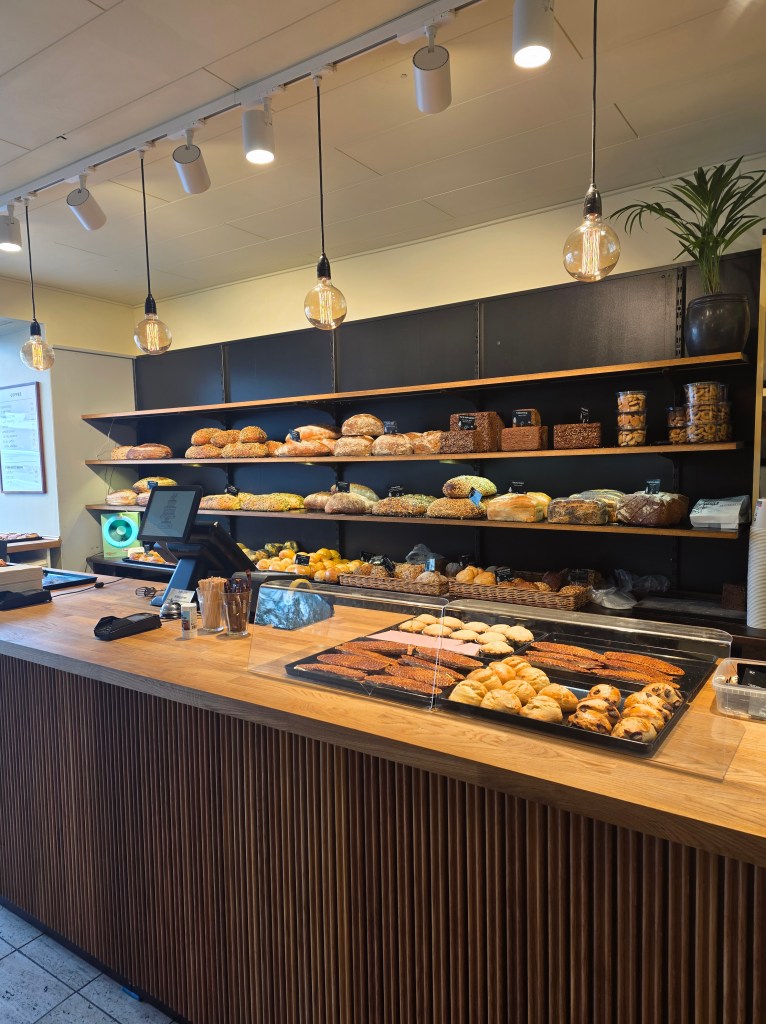
When you’re a weekend tourist it can be easy to never go to the same place twice. You never eat in the same restaurant, never grab breakfast at the same coffee shop, never pop into the same place. Time is too short. Taking a week to visit means you can afford to slow down. You can create a locality for yourself, with the same supermarket for drinks, the same breakfast bakery, the local wet-night eatery that is a short walk from the hotel. We ate at the same family bakery four days on the run. The shop assistant started saying hello to us, we saw a couple of faces drop by for their loaf or cup of coffee every day. It’s good. In Budapest last year, we even had a local pub but this year there were no mid-week european football games and no premier league football, so the need wasn’t there. We did go to Happy Hour at the hotel almost every day, which was a free drink for every resident, and quite often got talking to fellow residents about where they were from and what they were up to.
Food Makes a Place.


Not fancy food, but good food. We ate so well in Copenhagen. Breakfasts were Danish pastries, of course, which are not the healthiest breakfast but my Husband hates porridge or granola so we were kind of stuck. Lunches, though… I love rye bread anyway; and salmon, herring, pork, egg, potato, shrimps, so much good stuff to eat! We had smorrebrod every day, or beautifully packed sandwiches in seeded buns or bread. It was lovely. I suppose our most romantic lunch was on the quay at Nyhaven, but our best lunch was at a small bakery outside Fredericksborg Castle. They had only two small tables inside, but such cakes! We resisted most of the cakes, but who needed one, when lunch was so good?

And our evening meals were a good mix of old time (gammeldag) Danish food and the more cosmopolitan meals preferred by the younger market. We ate at a lovely Spanish restaurant, had parmesan aubergine at a local dive bar and ate at several traditional style restaurants: including one frequented by Hans Christian Andersen!
Knowing the History of a Place Helps!
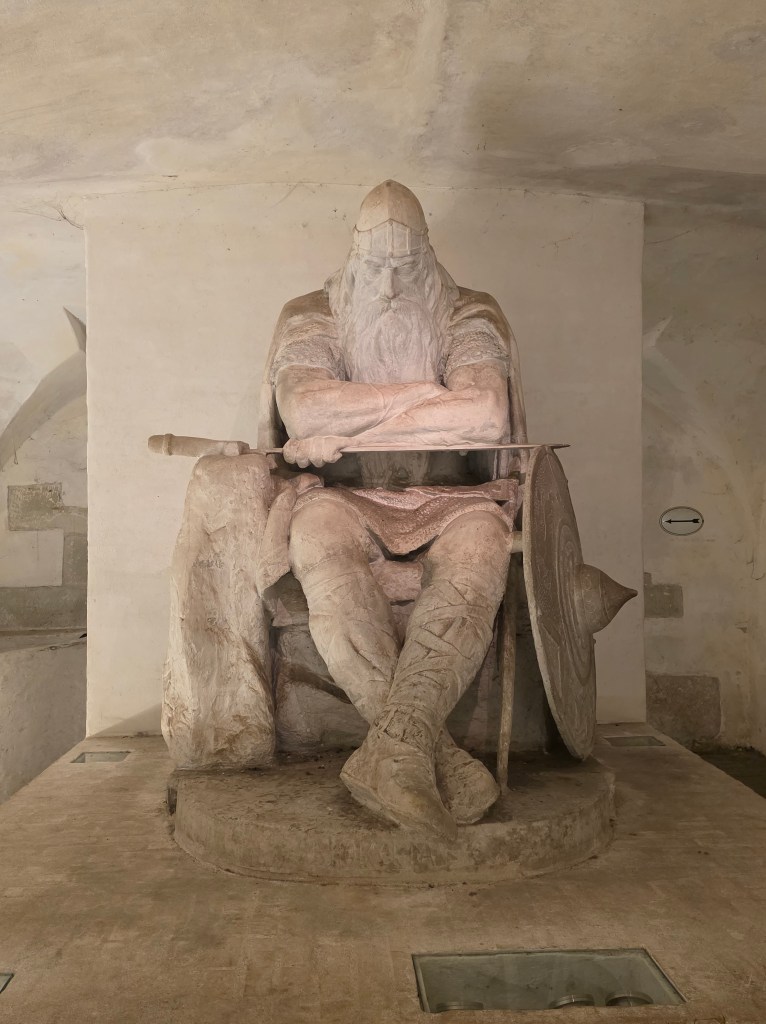
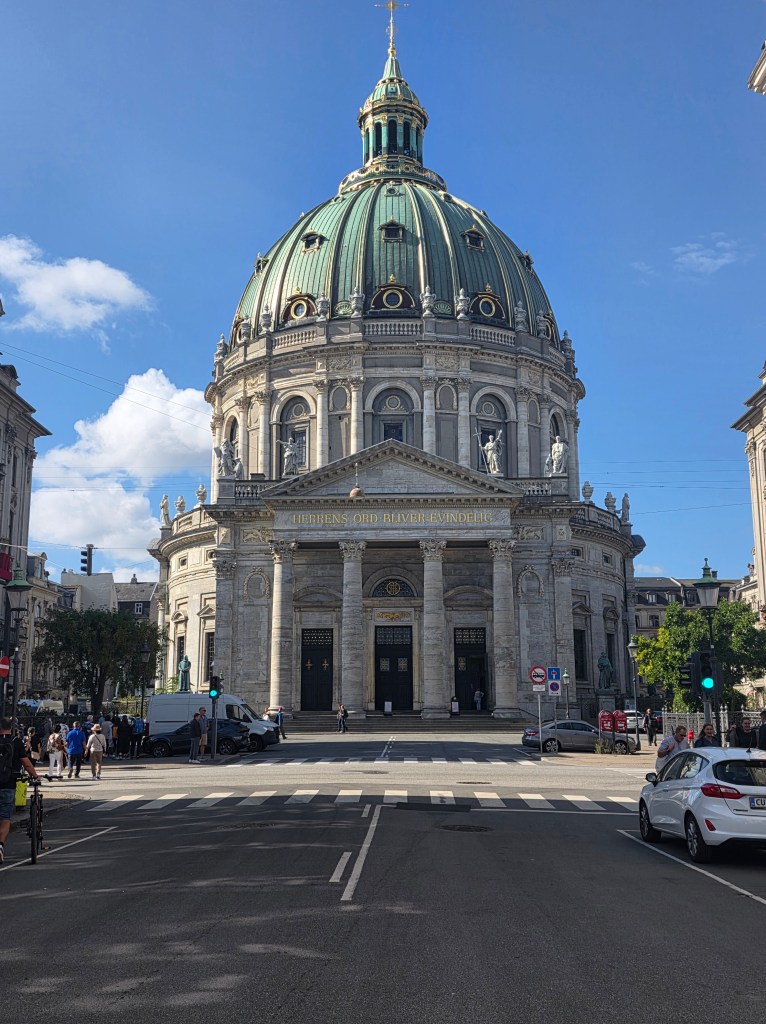


I knew a little about Danish history before we went, but finding out more when you’re there and being able to place the incidents in the actual places helps. Danish history is very interesting: there are mad kings, bad (English) queens, mythology, wartime histories both good and bad and of course a wonderful origin story for the flag.
Denmark has a proud Maritime history, so that appealed to me as a child of Liverpool. We also have a fabulous Maritime Museum, and it was interesting to see how the handling of each differs or is similar.
History can be So Romantic
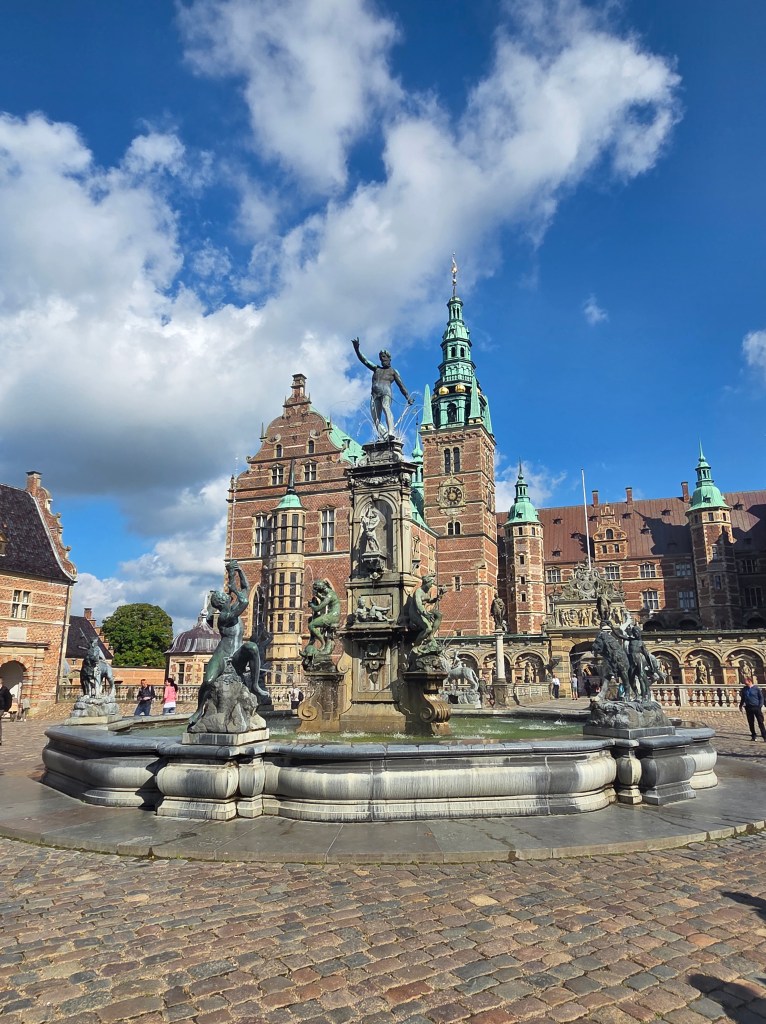

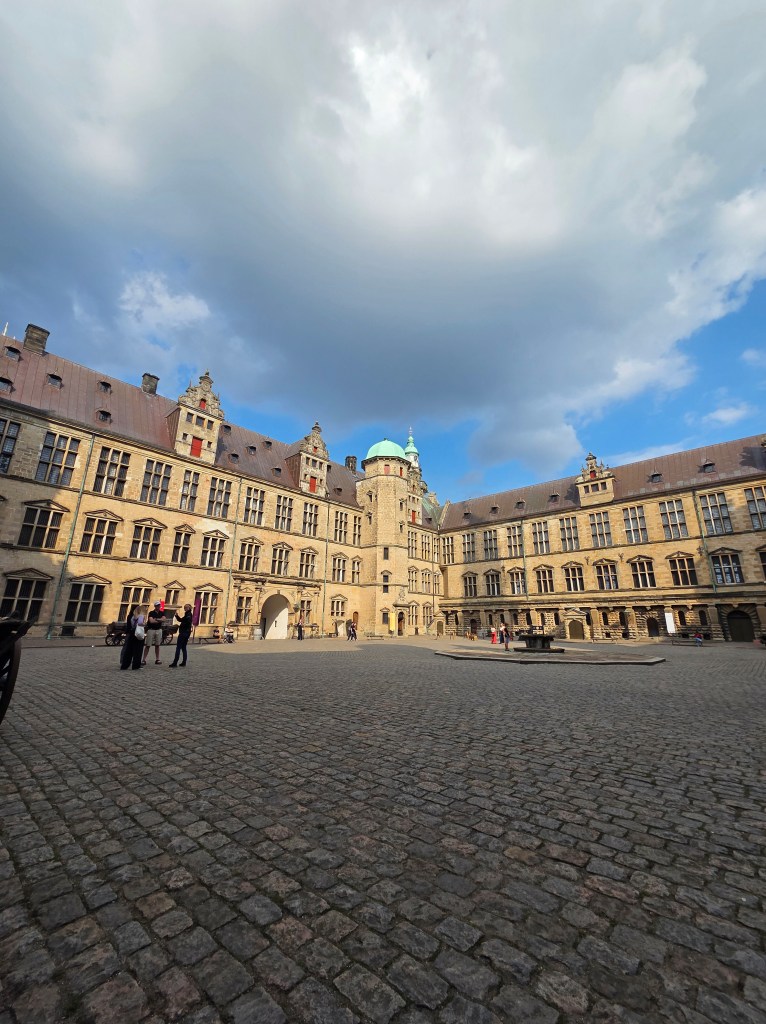
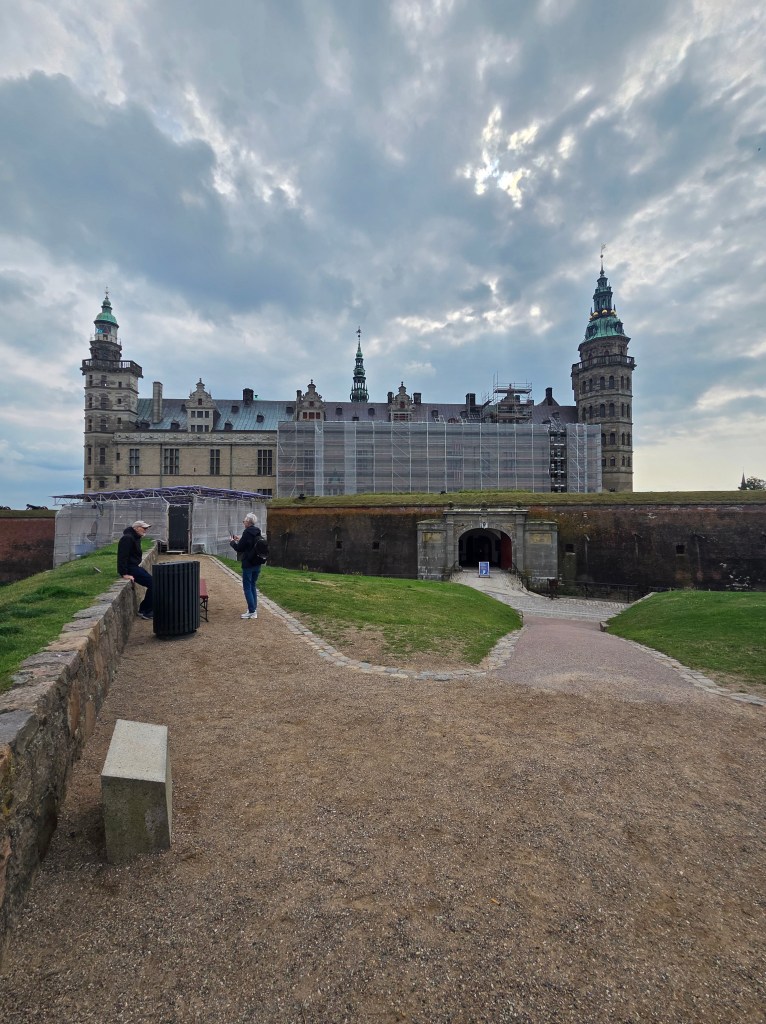
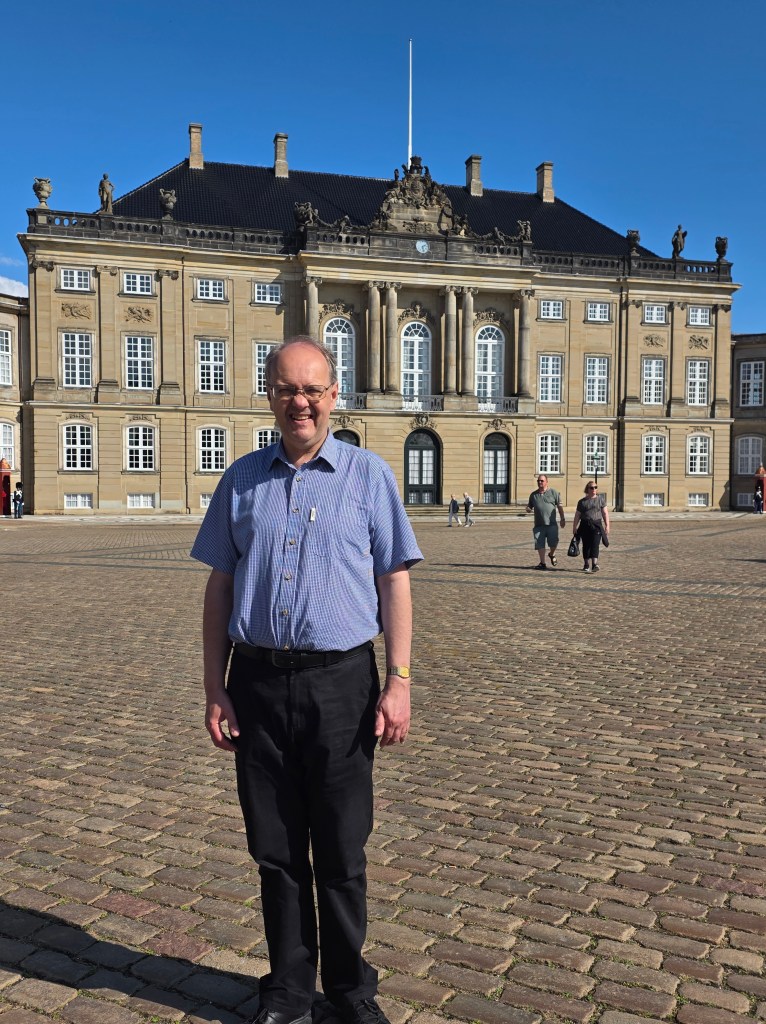
Danish castles come with in-built stories. Who commissioned the castle? For what reason? Who lived there? Why is it famous? Some, like Rosenborg, were built for love. Others, like Malmo Slot, for defense. Still others started off as defensive/fee collecting points and ended up being memorialised forever by quaint English playwrights who nicked stories from around the world and made Elsinore (the castle of Kroneborg) famous. I cried when I watched Ophelia going mad in the Grand Hall at Elsinore. (They have small bands of actors who present Hamlet on a kind of continuous loop. Ophelia went mad at 1pm, 3.30 and 5pm on the dot every day)
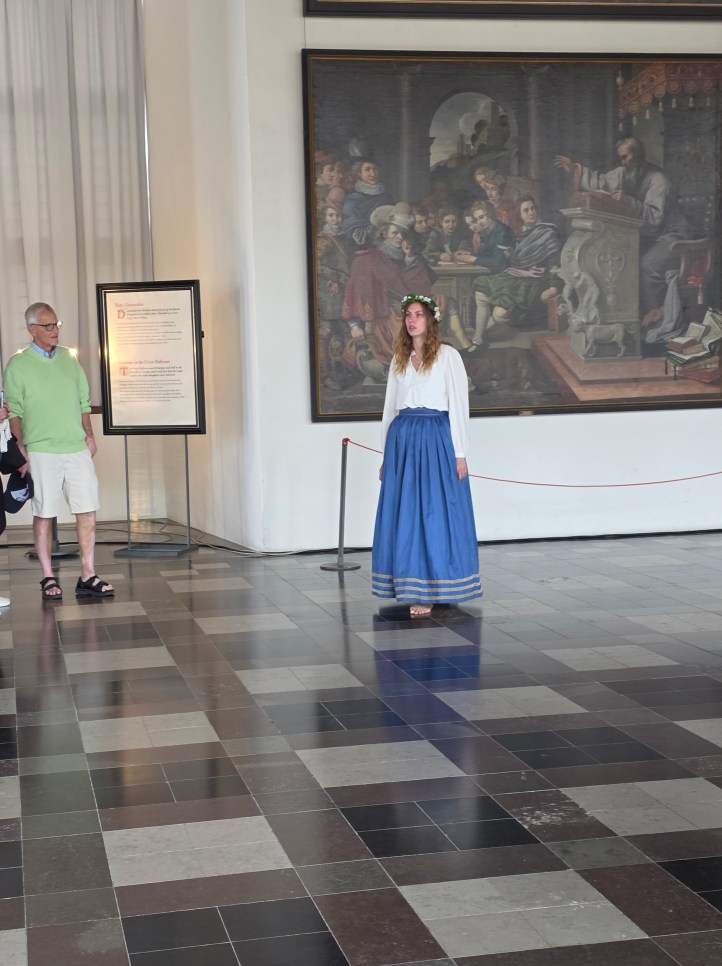
And the state rooms! Some of them were decorated, mirrored, large, plastered, some had thrones, some had lions, some had ceilings and paintings and portraits beyond portraits. We seriously spent hours gazing at them.
Outside Spaces Make a Place
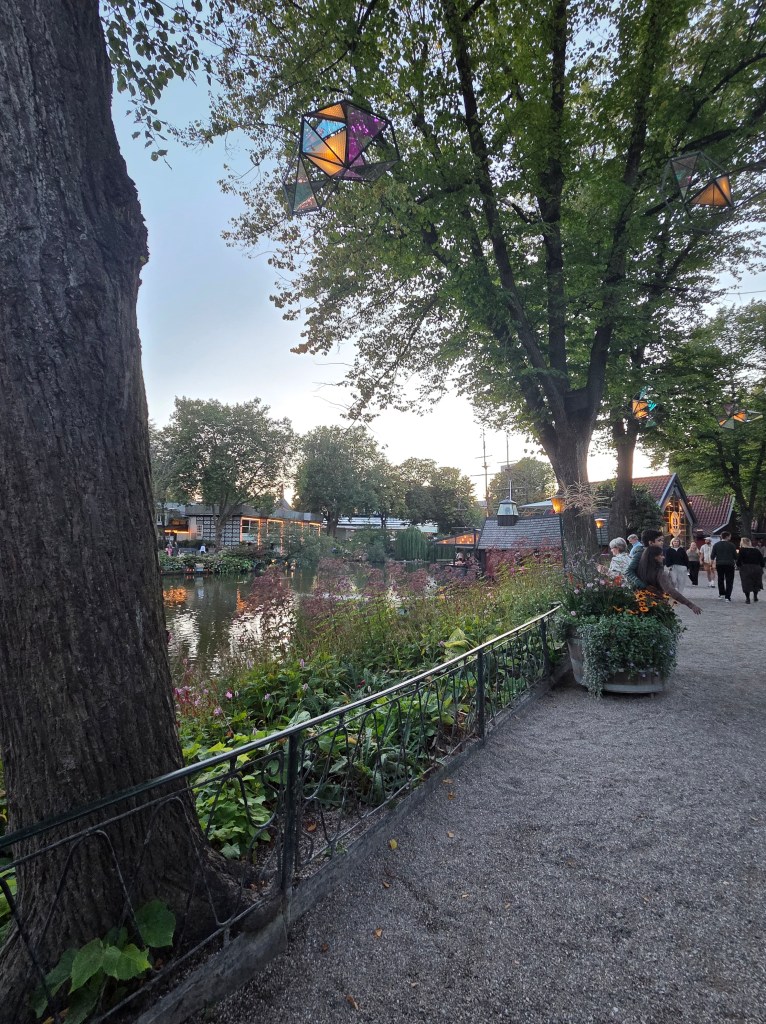


I love that Copenhagen has so many small squares or parks and that they are all within a short walk of pretty much anywhere. We loved the King’s Garden behind Rosenborg, the Churchill Park near to the Little Mermaid, and the fancy Baroque garden behind Fredericksborg. Anywhere with a Linden Avenue and a bench set under a waiting tree. Grass to sit on, a fountain to watch and a convenient cafe to buy a cool ice or drink at. We were so fortunate that the weather was crazily good. We only ever had Camelot rain (during the night) and even the cloudy days were warm enough not to need several layers.
Are the Danish Really Happy?
The ones I met were. Not in an ecstatic, over-the-top way, but quietly. They have a routine and a lifestyle that’s happy with what they have. I couldn’t get over the way that the city centre schools just use public play areas and parks as recreation spaces. We saw crocodiles of schoolchildren heading off to play or visit the galleries and museums.
Away from the tourist spots, the bars were filled with locals just enjoying life. They were talking to each other. We noticed a distinct lack of loud, blaring, pumped out music everywhere. Shops didn’t feel the need to fill every brain cell, neither did cafes or restaurants. And travellers on trains were quiet, listened through headphones or read. The loudest travellers we met were three late teenage boys, and even they were respectful to the elderly man in front when they got off.

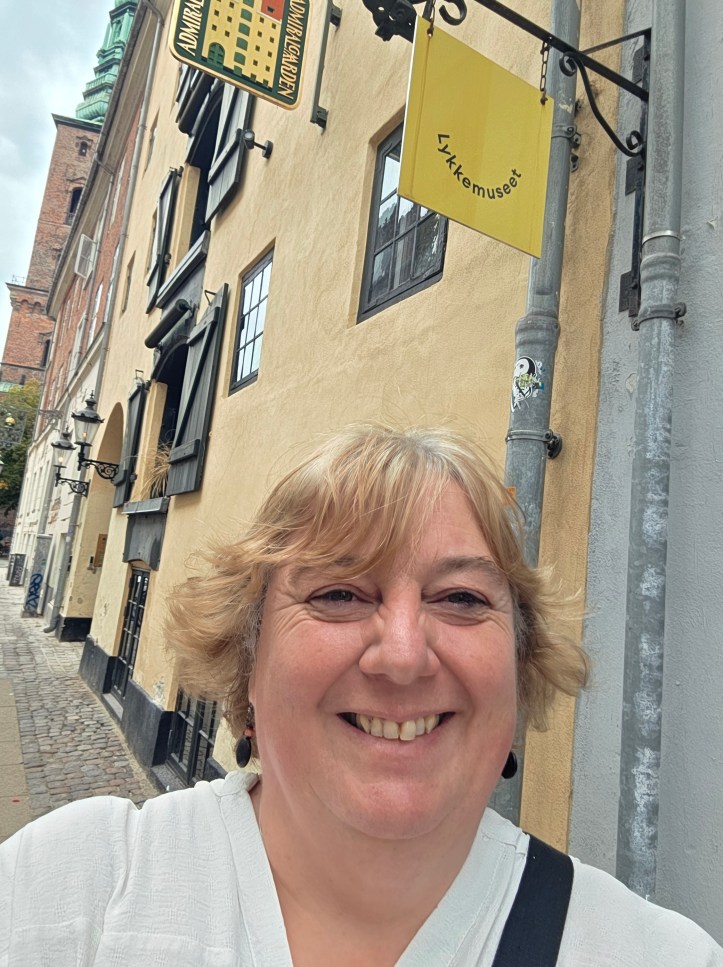
I visited the Happiness Museum (of course). Meik Wiking is really happy at the moment: he’s still on paternity leave from his child. But I visited a room full of post it notes left by visitors, all answering the same question: what makes you happy? So many people, and yet what came through most was connection: family, friends, partners, children, dogs or cats. The people wanted to feel connected. I think Denmark does that. People know their own history, share a flag that they are proud of, feel that they have a community. Perhaps the challenge going forward is how to make sure that community, belonging, pride etc can be carried on in a global world.
Perhaps the global world needs to learn from Denmark and other Scandi countries: high trust societies create high trust people who can afford emotionally to be happy. There’s a lot of talk about values raging across the world at the moment. Perhaps we (in Britain and across the world) need to keep our shared values in mind rather than assume everything good is bad or everything old is out-of-date. I’m a fan of people having a love for their place: of feeling rooted, but I don’t necessarily mean that people can never move. The best plant sometimes needs new soil, a different shade-level to achieve their best. What suits one doesn’t necessarily suit another. Recognising difference is important, but even more important is recognising fundamental similarities: we all belong, we all love, bleed, hate, have basic needs, seek togetherness, find fault with each other, lose our place and rediscover how wonderful life is, we just do it all at different times and in different ways.
I’m still digesting my Danish lessons. Still looking at what I saw and felt. I’d go back again like a shot, but we’re exploring old European cities one by one. Next year’s adventure isn’t quite planned yet, but it will be by January. But Copenhagen: Kobenhavn. I think I left a part of my heart there forever.

How to Hygge the British Way is my gift to the world. I don’t get paid for writing it, I’m not in it for the kudos, financial rewards, to become an influencer, work with brands or otherwise make any money from the blog. That’s why there are no ads, and any products I mention and recommend have either been gifted to me or bought by me with my everyday wages or donations from supporters. Every book I review has been bought and read by me, unless stated otherwise.
I do get a couple of pennies each time someone buys from the Amazon links on my page, as an Amazon Affiliate, but otherwise if you’d like to support me, I like to give something back in return. That’s why I write books. It always feels good if you get a book back in return for some money. You can find a full list of my books at my Author’s Page on Amazon, but especially recommended for this time of year are:
Cosy Happy Hygge: Setting up a rhythm to life and rituals to enjoy it to make for a more balanced life that handles waves and storms better. The book has small and easy ways to make your life flow with grace and happiness, which lead to more hygge.
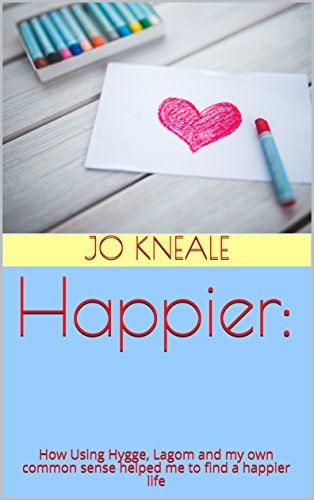
Happier: Probably my most personal book, it’s the story of how I used hygge and the little things in life to help boost my happiness. I still go back and reread to remind myself what I need to do to be a happy human. And it’s always the little things.
My Christmas books are always available: Have Yourself a Happy Hygge Christmas is a good place to start, on how to make the season cosier, happier but Enjoying a Self-Care Christmas may be a faster and more seasonally appropriate read.
I’m currently working on two book projects: I have a hankering to rewrite 50 Ways to Hygge the British Way, so it’s not available at the moment, but even dearer to my heart and my next stated aim is to finish and publish my next book, Simple Plus Cosy = Hygge. It will be about homemaking and how the home we create shapes the hygge we have. Hopefully it will be finished by the end of Winter 2026.
If you’d like to support me, but don’t want to buy a book, I have a Paypal.Me account as Hygge Jem. Every little helps, so even a few pence goes towards the books, goods and courses I use and recommend on the site. I’m grateful for every little bit that brings me closer to my dream of full-time writing, and I know I couldn’t still be writing if it weren’t for the support of many readers and friends out there. Thank you all for every little bit of support, emotional, physical and financial, you give me.
If you’ve enjoyed this article, don’t forget to share it or save it so others can enjoy reading, thinking about and living hygge as well.
The photo between post and promotions is from Helsingor, or Elsinore if you prefer. They just had this skull resting on the well top, I presume because Hamlet goes past and does his ‘Alas, Poor Yorick!’ bit. Shakespeare. I’m a big fan.
 How to Hygge the British Way