This is one of my favourite daily rituals, and it really makes a difference to me if I can stick to it.
Work (whether external or internal, paid or voluntary) demands a level of attention and effort whether we love our jobs or hate them. Anything with requirements, standards (however low) and accountability, even if only to the children waiting for an evening meal after a day at school, lays pressure on us. And mostly we cope with that pressure, we do what we need to/want to/can do, and work goes okay.
Evening times*, on the other hand, are all for us. They’re about relaxing, restoring our balance, emotionally and psychologically, and resting ready for the next round. * Of course, evening times may not actually be the evening if you work nights or shift work. Although I’ll keep saying evening times here, what I really mean is that precious time you spend away from work and out of bed: the time when you fit in any socialising, crafting, reading, watching, belonging to groups, exercise, social activities or anything else that is done without the major point being profit and with the main purpose being purely personal.
We want our evening times to work well, to restore us and send us to bed ready to rest and get up and continue the circadian rhythm again tomorrow. I’ll talk about my evening routines and rituals in a later blog, but today I’m concentrating on the space between work and home. The transition from business, efficiency to relaxed and calm.

For many years I was a stay at home Mum, and there wasn’t a big space available. But when the last child had gone up to bed, I was free at last to relax. As a teacher, I used to count my commute to and from work as my decompression chamber. Now, I have an hour or (bliss!) a couple of hours before I have to start the evening meal that I use as a space to prepare myself mentally and physically to be At Home. It’s sacred. I take between 45 to 75 minutes to restore my hope in humanity, find my solid ground and make myself box off the work worries and take up the homemaking worry. It’s a different kind of worry, of course, but still worry. The Decompression Zone gives me a chance to get grounded before starting again.
There are several different ways I achieve this, depending on weather, who is at home, what the mood is, where I’ve been or what I’m up to that evening. Tonight, for example, I’m leading a course at church, so time is limited. I’ll need to have the evening meal ready for the time I go out, and I’ll eat after the course, so I have 30 minutes roughly free. I’ll have to talk to my daughter, perhaps pass on responsibility for the chicken and broccoli casserole I’m planning to make to her, and check on my Mum who is currently in hospital. It’s not the most relaxing decompression I could have, but life is life and we do what we need to do. I’ll make it as hyggely as I can, probably with hot drinks and definitely with a few minutes to change clothes. On other days, especially when the daughter is occupied elsewhere, I may get a couple of hours to decompress. Anything over 10 minutes is enough, and anything over an hour starts to feel like evening rather than decompression.
My top tips for a sensible decompression between work/home, day/evening are:
- Hot drinks are a necessity, unless it’s absolutely the heat of summer. There is something about a good mug and sitting to sip from it that makes you relax. I don’t advise alcohol, because making it the focus of your decompression can create the idea of dependency. There is nothing worse than the idea of ‘wine o’clock’ as a real thing. One day it may not just be a giggle of a decompression, but an actual need. Safer to stick with chai.
- Don’t start a new project in your decompression zone. It’s a time to switch off and down, not change the focus of deep attention. That doesn’t mean you can’t craft or create, just that it should be something that needs no deep thought or attention. Crochet blankets are ideal; colouring sheets work better than a blank page; and any baking you do should be old, well-worn favourites not a new and exciting recipe for anything intricate.
- If you can’t relax at home, or you’re not allowed to, try to find or create a place outside of home or work that will function well. Perhaps there’s a coffee shop, a local park, a garden centre or (last resort) a quiet road, close, cul de sac or even a layby where you can pull in and switch off. If you use public transport, find a good set of headphones and create a space wherever you are.
- Changing clothes acts as a very real marker that you are now Off Duty. Change into loungers, have a comfortable set of jeans or a loose dress or (my children’s preferred option) get into your pyjamas straight away. I don’t like wearing pyjamas out of the bedroom for too long, so I like a set of loose pants, yoga or jogging bottoms and a baggy jumper that acts as both cover and cosy wrap.
- If you’ve brought work home, set a time to handle it. Either do it and then start your decompression ritual, or set a time to go back to it. Either way, have a finishing time in mind and move away from the work in good time to settle down and get ready for bedtime.
- Cleaning work off your body can be a real indicator that you are Now Home. A warm bath, a refreshing shower or even just cleansing make up off your face can be a way of wiping stress away. Consciously think to yourself as you cleanse that that is what you are doing. Watch the work stress drain away, and go back to real life.
- Appreciate that other people may or may not benefit from a decompression period. My husband has always come in, changed clothes and spent a few minutes upstairs either reading or scrolling. It’s what he does, and he comes down in a better mood because of it. Especially if your working hours are different, be prepared to accommodate your housemate’s preferences.
- If you drive to and from work, and return home to a house full of people who don’t appreciate the idea of you having a decompression time (yes, 8 year old offspring of the past, I’m looking at you) then make your car a sanctuary where you can decompress as you drive. It’s dangerous to drive and have a hot drink, but you could make sure you have a packet of your favourite sweets to hand, that there’s a decompression playlist on your stereo, and that you have an airfreshener that puts out relaxing scents. I change mine by the season, so we’re currently in Evenings By The Fire season in a slide-on car aromatherapy diffuser.
- Doing something mindful, like yoga or a walk through nature, can be a fast track to a calm you. Grounding as a concept came from yoga, so a short online guided session can be good, or walking at a leisurely pace through field, forest or garden can help. Being in nature also grounds you in the seasons, so that’s a double benefit.
- Finally, you could (if you’re lucky) find a sacred place to decompress. I have a church near me that stays open all day until 6 pm. I’m a Christian, so sitting in the quiet, soaking up the stillness that exists in a place that is full of people on Sunday and silent the rest of the week is a very easy way to find peace. My breathing relaxes, my heartbeat slows and I find the solitude is a great help in praying, especially since I’m free to do so with my eyes open and able to focus on a saint or a window or a statue or a symbol. If you’re not of a faith that has a holy building that you can use, use nature. Find a grove, a stone outcrop, a place by a stream or in a field where the noise of life is dimmed, and you can sit in peace. And if it’s wet, see if you can find a different public building that could work instead. Perhaps a town hall near you has a fabulous atrium, a gallery nearby is free or has membership that means you could go in for 20 minutes to focus on a picture that speaks to you, or perhaps you’d prefer a bookshop with a settee and a different genre to browse each time?
Everyone has a preferred method to relax: I know I’ve missed some ways that you might find invaluable. What’s your top tip for leaving stressy situations behind and sliding into hygge mode? What do you recommend most?

How to Hygge the British Way is my gift to the world. I don’t get paid for writing it, I’m not in it for the kudos, financial rewards, to become an influencer, work with brands or otherwise make any money from the blog. That’s why there are no ads, and any products I mention and recommend have either been gifted to me or bought by me with my everyday wages or donations from supporters. Every book I review has been bought and read by me, unless stated otherwise.
I do get a couple of pennies each time someone buys from the Amazon links on my page, as an Amazon Affiliate, but otherwise if you’d like to support me, I like to give something back in return. That’s why I write books. It always feels good if you get a book back in return for some money. You can find a full list of my books at my Author’s Page on Amazon, but especially recommended for this time of year are:
Cosy Happy Hygge: Setting up a rhythm to life and rituals to enjoy it to make for a more balanced life that handles waves and storms better. Lent is a season of rituals and resets. The book has small and easy ways to make your life flow with grace and happiness, which lead to more hygge.
Happier: Probably my most personal book, it’s the story of how I used hygge and the little things in life to help boost my happiness. I still go back and reread to remind myself what I need to do to be a happy human. And it’s always the little things.
IMy Christmas books are always available: Have Yourself a Happy Hygge Christmas is a good place to start, on how to make the season cosier, happier.
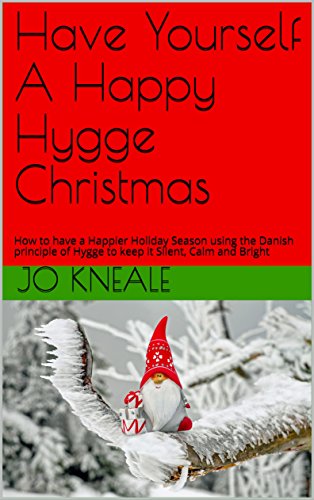
Celebrating a Contagious Christmas was written during covid year, but has useful advice on celebrating when times are hard anyway and Enjoying a Self-Care Christmas is a short e-book on keeping Christmas simpler, easier and better for you, your waistline and your budget. It even includes 25+ suggestions for self-care activities over Christmas, as simple as sipping tea, keeping a list journal or lighting a candle. Bigger is not always better for Christmas.
I’m currently working on two book projects: I have a hankering to rewrite 50 Ways to Hygge the British Way, so it’s not available at the moment, but even dearer to my heart and my next stated aim is to finish and publish my next book, Simple Plus Cosy = Hygge. It will be about homemaking and how the home we create shapes the hygge we have. Hopefully it will be finished by the end of summer 2025.
If you’d like to support me, but don’t want to buy a book, I have a Paypal.Me account as Hygge Jem. Every little helps, so even a few pence goes towards the books, goods and courses I use and recommend on the site. I’m grateful for every little bit that brings me closer to my dream of full-time writing, and I know I couldn’t still be writing if it weren’t for the support of many readers and friends out there. Thank you all for every little bit of support, emotional, physical and financial, you give me.
If you’ve enjoyed this article, don’t forget to share it or save it so others can enjoy reading, thinking about and living hygge as well.
The photo between post and promotions is by Alisa Anton on Unsplash. I like the pause it seems to hint at: the person, who has stepped out of the shot for a moment, has their book ready to read and hot chocolate on the point of perfection: they’ve lit their candle, and settled down to enjoy a fresh breeze before the autumn winds turn sharp and sarcastic. They just need… what? Their pen? A blank page to write a loved one a letter? Socks, or a throw? I love photos that drag you into making up a story.
 How to Hygge the British Way
Some great suggestions here. I definitely notice those days when I don’t manage to fit in decompression time I am worse for it and it affects my sleep later in the day. So important to allow ourselves this all important time however long it is.
LikeLike
Even a cup of tea as a pause helps!
LikeLike