
I will arise and go now, and go to Innisfree,
And a small cabin build there, of clay and wattles made:
Nine bean-rows will I have there, a hive for the honey-bee;
And live alone in the bee-loud glade.
And I shall have some peace there, for peace comes dropping slow,
Dropping from the veils of the morning to where the cricket sings;
There midnight’s all a glimmer, and noon a purple glow,
And evening full of the linnet’s wings.
I will arise and go now, for always night and day
I hear lake water lapping with low sounds by the shore;
While I stand on the roadway, or on the pavements grey,
I hear it in the deep heart’s core.

(The Lake Isle of Innisfree by W B Yeats)
August is such a blissful month, isn’t it? I had break after break in June to July, so it’s a relief to have little to do except clean, work, read, craft, cook and bake in August. A proper staycation, perhaps, except I’m in the office four and a half days a week and just been accepted on a Lay Reader training course from September, so there’s an element of racing to read for fun before I only have time to read for edification.
Where did I get on my breaks away? Well, one was a history festival, one a trip to London to attend Wimbledon and one a week in Ireland, near to Omagh, and visiting with my Dad who comes from there. When the trip was originally planned, I was supposed to be chauffeuring him there and back again. Gradually as this year went on and he decided he was okay at driving and getting more adventurous, his stay extended until we were only there for one out of the four weeks he was!

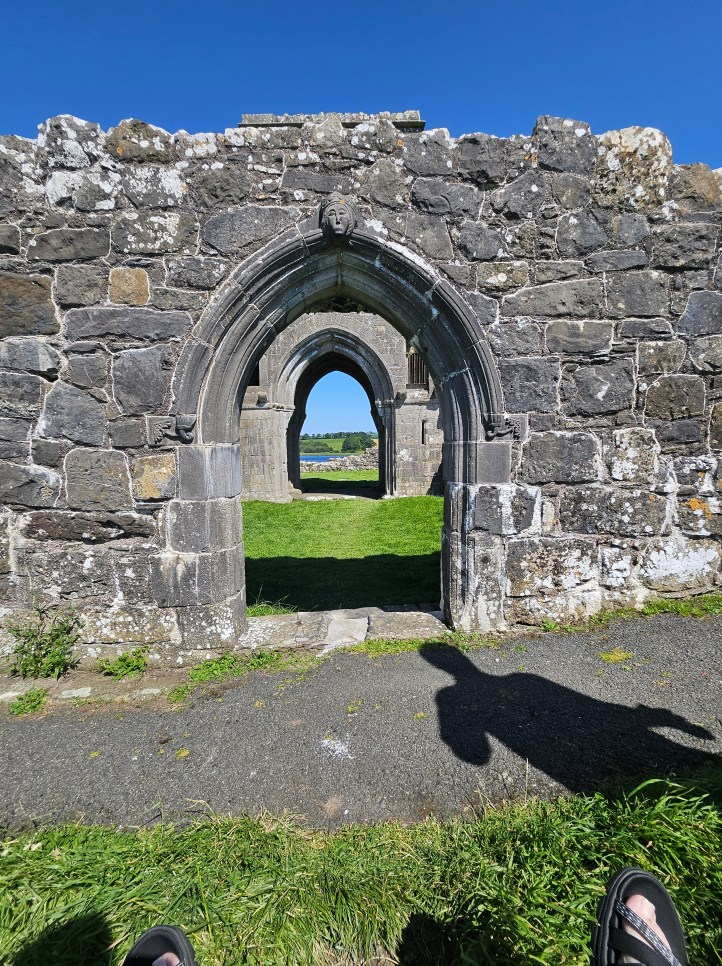
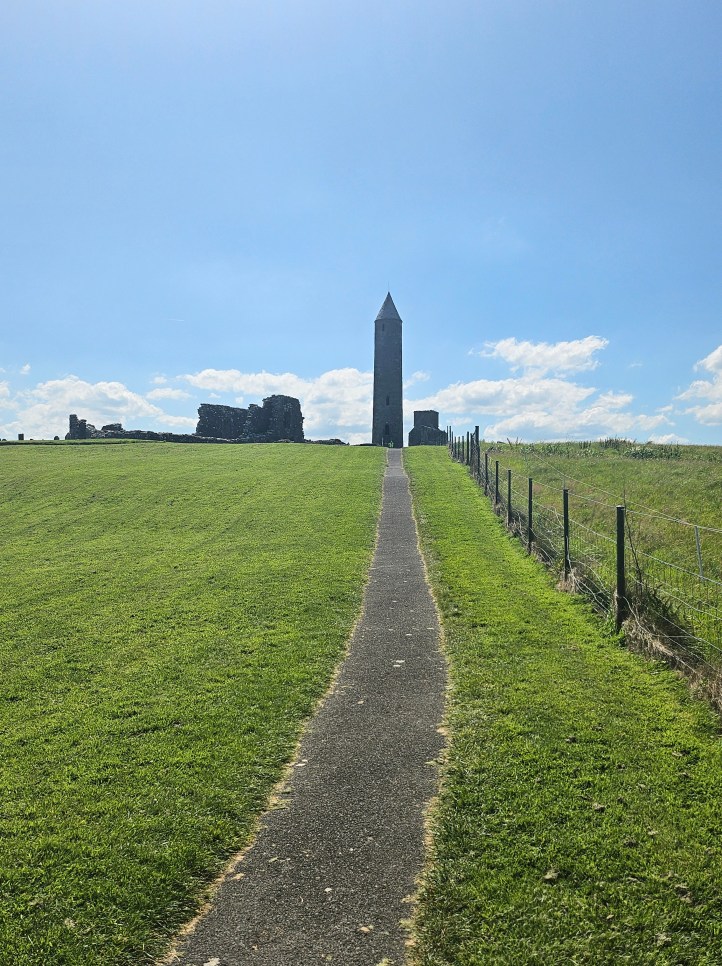
This is Dad working his way slowly up the hill of Devenish Island. The buildings are the remains of a Celtic Christian monastery established by St Molaise in the 6th Century. The tower dates from about 400 years later, and was rebuilt when the original tower was destroyed because a local Chieftain’s son had been burned alive there. History lies lightly on the ground in Ireland, but is buried deep into the heart of every Irish man and woman.

I’ve sung of Soul’s Shelters and High Towers for long enough in Be Thou My Vision, but never seen a round tower in the flesh. They’re fascinating pieces of architecture. The steps up to the door miss out the ground level entirely. Some bases are solid: others were storage areas inaccessible except by the first floor. This picture just whispers to me of the (over) one and a half thousand years of worship that have gone on in Ireland. I’ve got it as my screensaver now, it’s beautiful and the peace just drips off it.
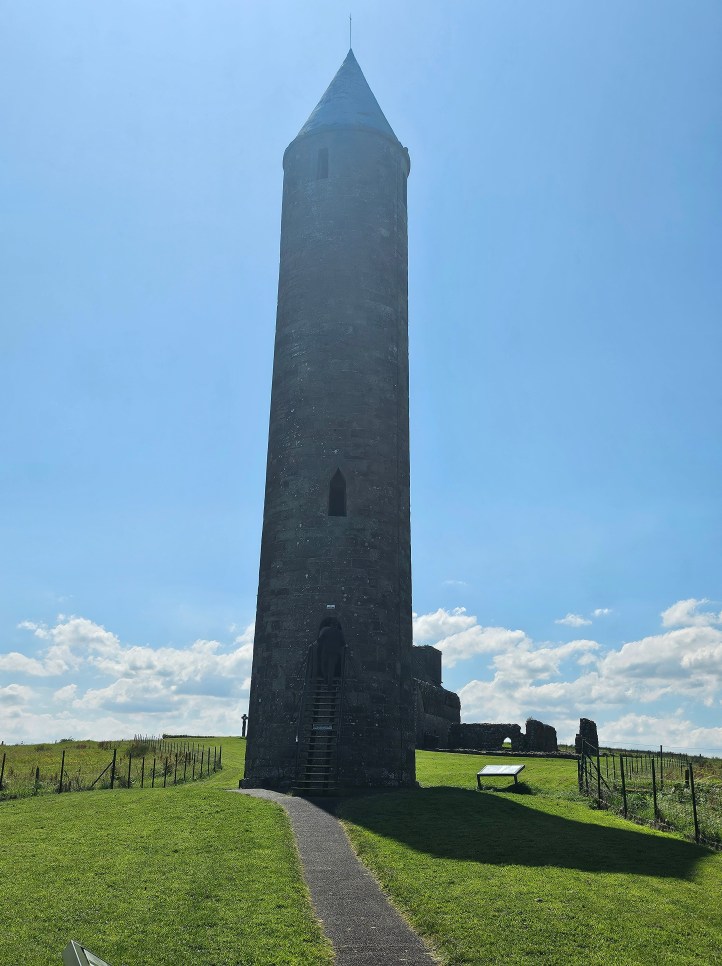


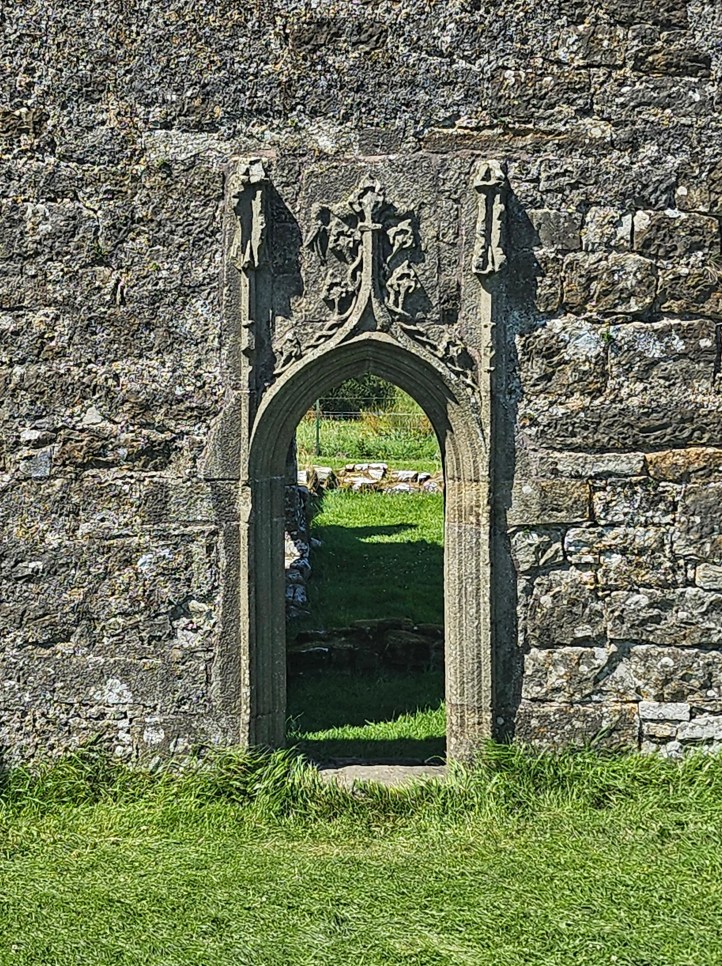
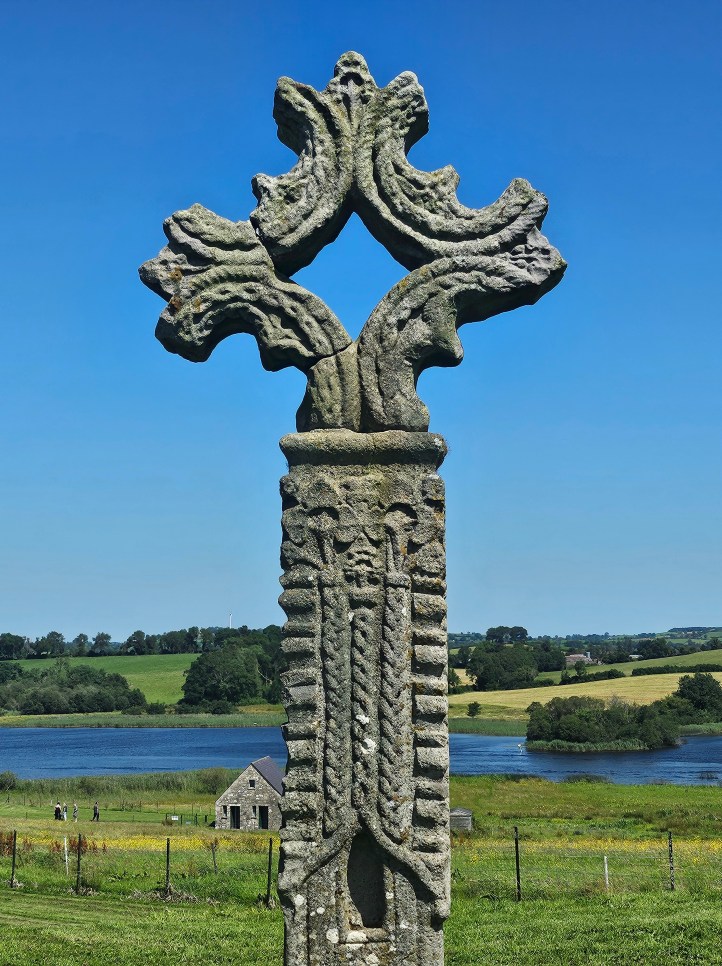


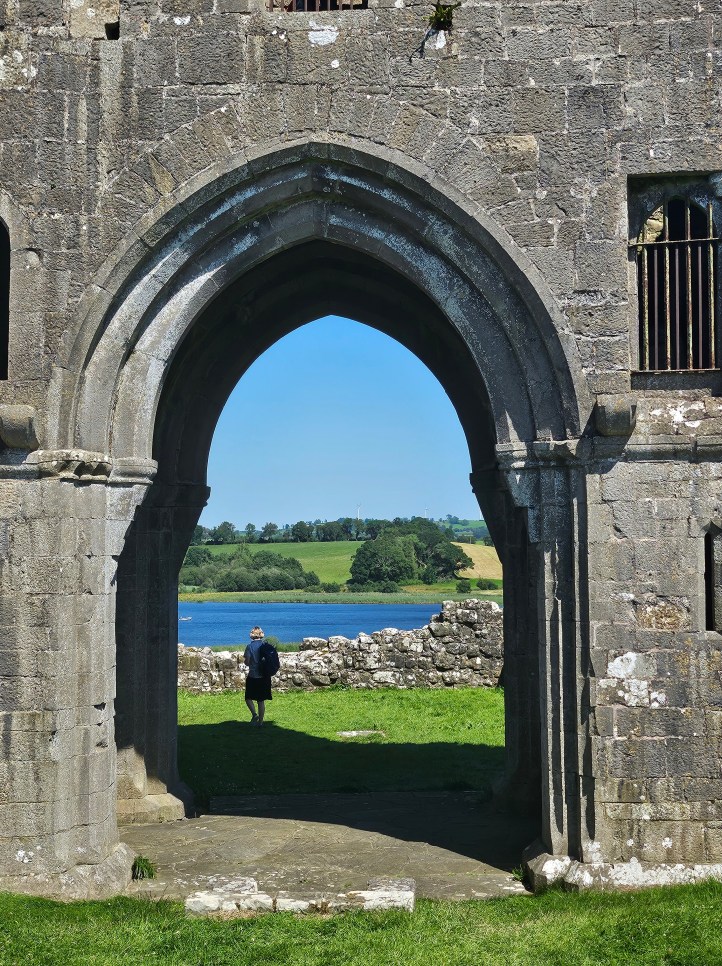
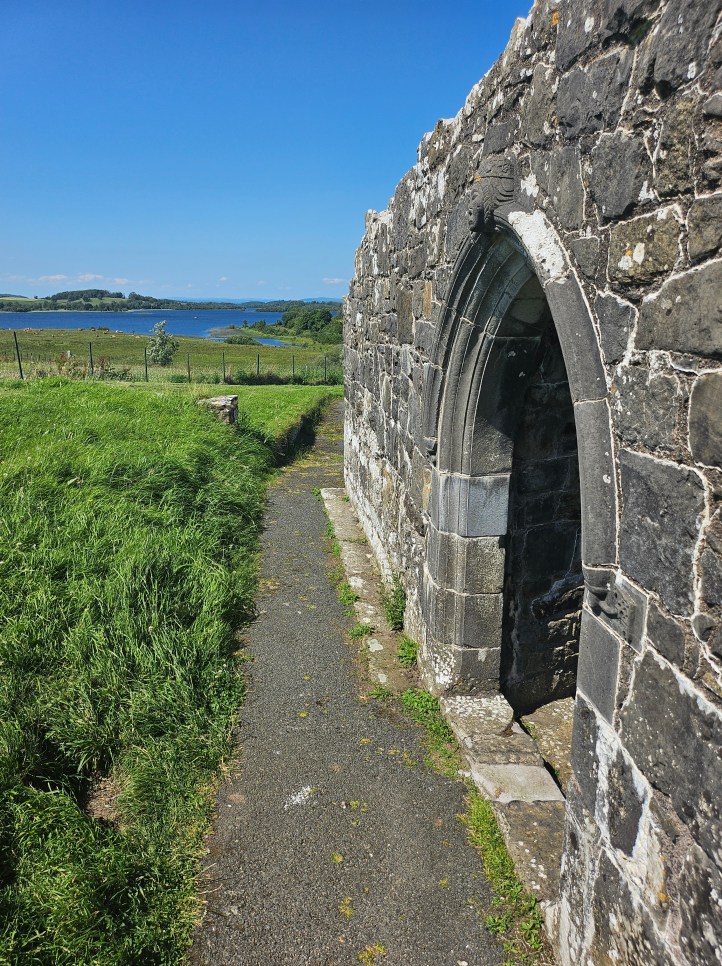
Everywhere you looked there were towers or doors, arches, lintels, spaces that had been part of the monastery until history interrupted them. Monastic living, the regular ordering of a day and a seeking after simplicity and peace, is supposed to be making a come back. If I have to write a long-form essay for my training, it will probably be on modern monasticism or lay-membership of monastic orders.

The island’s name means ‘Ox Isle’, possibly from the lifestock that roamed it freely. We didn’t see any cows, but we did see sheep spotted out across the meadow and down to the lough beyond. Lough Erne has 300 square miles of water and hundreds of islands spotted across it. Devenish, at 70 acres, no longer has any permanent inhabitants, but it has echoes. You can imagine the wattle and daub houses the monks initially built, the stone house built for the Abbot later on. Even the churches have echoes, although no roofs because the stone slates were removed to roof the local castle in Enniskillen.
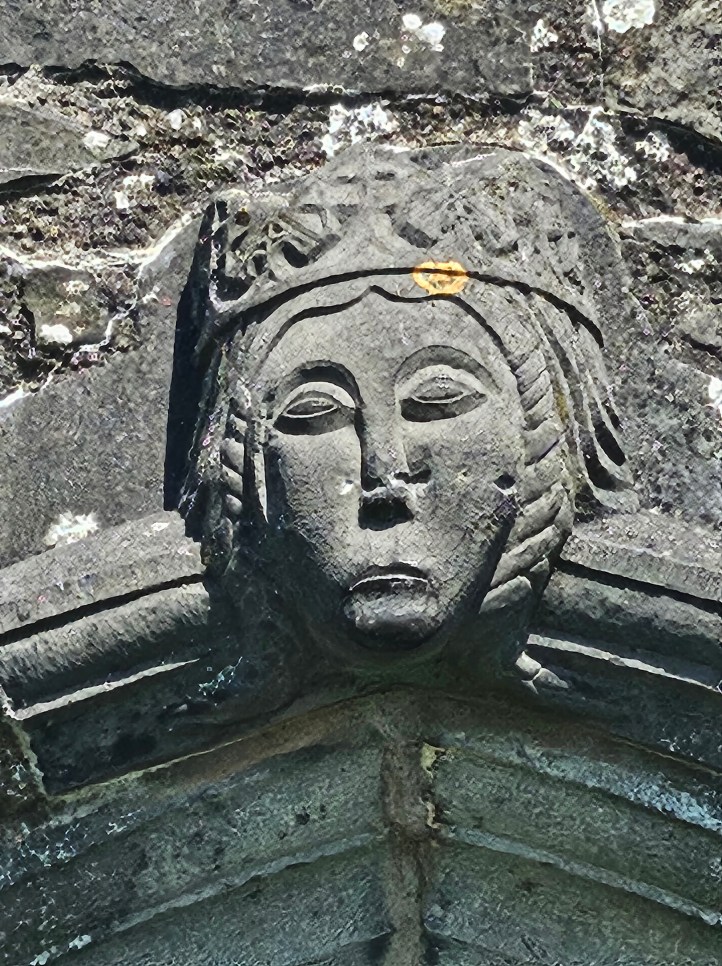
The last monks left Devenish in the 17th Century, and have never returned. But I believe that the need for monastic living… a place that saw sacred and secular as inextricably bound, not separate and distinct… will come back. We have a very secular world, a world of self-indulgence, anger, confrontation, distrust, greed, and possessiveness of resources, land and knowledge. We’re living on our own nerves and getting on each other’s. That can’t go on forever. I’d read of Ireland as a liminal place, a place where the worlds slide nearer each other and time becomes a misty curtain rather than a brick wall. I think Devenish is one of those places. You hear nothing, except the boats on the lough. You see water and waves of grassland crops around you. Sheep bleat, birds sing and peace comes dropping into your heart.
If I were offered the chance, I’d take a small cottage there (albeit with running water and a small generator) and spend hours…. days…. watching the sky. We had blue so bright it blinded, but I can imagine it would have clouds of pink and grey, black thunder and the fleeced herring mackerel skies that resemble nothing so much as cotton wool teased over the blue sheet of God’s almighty bed.
Instead, I’m at home again in Liverpool, and finding small puddles of peace where I can. My garden is bare earth, since we’re having it re-turfed and the dry months have left the grass dun and sere (love those words: I first met them in Jane Eyre aged 13 and had to look them up). And Autumn is slipping in like a small slick of oil over the kitchen sink. It will soon be here: and I will soon have to make my preparations.
How to Hygge the British Way is my gift to the world. I don’t get paid for writing it, I’m not in it for the kudos, financial rewards, to become an influencer, work with brands or otherwise make any money from the blog. That’s why there are no ads, and any products I mention and recommend have either been gifted to me or bought by me with my everyday wages or donations from supporters. Every book I review has been bought and read by me, unless stated otherwise.
I do get a couple of pennies each time someone buys from the Amazon links on my page, as an Amazon Affiliate, but otherwise if you’d like to support me, I like to give something back in return. That’s why I write books. It always feels good if you get a book back in return for some money. You can find a full list of my books at my Author’s Page on Amazon, but especially recommended for this time of year are:
Cosy Happy Hygge: Setting up a rhythm to life and rituals to enjoy it to make for a more balanced life that handles waves and storms better. The book has small and easy ways to make your life flow with grace and happiness, which lead to more hygge.
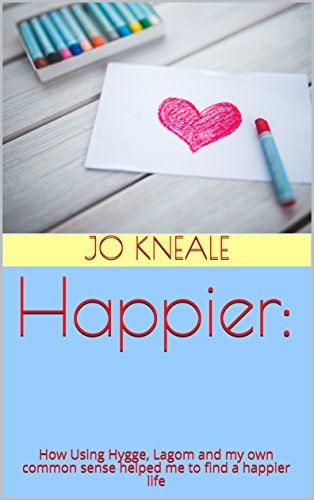
Happier: Probably my most personal book, it’s the story of how I used hygge and the little things in life to help boost my happiness. I still go back and reread to remind myself what I need to do to be a happy human. And it’s always the little things.
My Christmas books are always available: Have Yourself a Happy Hygge Christmas is a good place to start, on how to make the season cosier, happier but Enjoying a Self-Care Christmas may be a faster and more seasonally appropriate read.
I’m currently working on two book projects: I have a hankering to rewrite 50 Ways to Hygge the British Way, so it’s not available at the moment, but even dearer to my heart and my next stated aim is to finish and publish my next book, Simple Plus Cosy = Hygge. It will be about homemaking and how the home we create shapes the hygge we have. Hopefully it will be finished by the end of Winter 2026.
If you’d like to support me, but don’t want to buy a book, I have a Paypal.Me account as Hygge Jem. Every little helps, so even a few pence goes towards the books, goods and courses I use and recommend on the site. I’m grateful for every little bit that brings me closer to my dream of full-time writing, and I know I couldn’t still be writing if it weren’t for the support of many readers and friends out there. Thank you all for every little bit of support, emotional, physical and financial, you give me.
If you’ve enjoyed this article, don’t forget to share it or save it so others can enjoy reading, thinking about and living hygge as well.
The photo between post and promotions is by Sergey Shmidt on Unsplash. I loved the sun, the yellow flowers and the hint of summer in the meadow.
 How to Hygge the British Way